Lightweight Multi-Mirror Optical System for a High-End Space Telescope
Case Study: Lightweight Multi-Mirror Optical System for a High-End Space Telescope

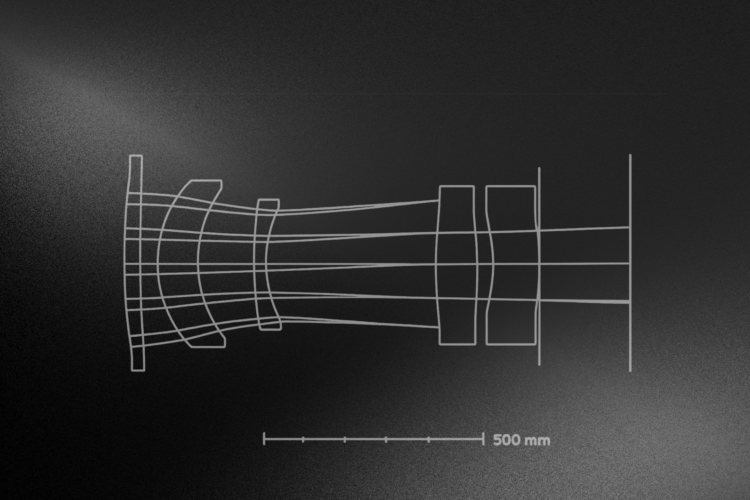
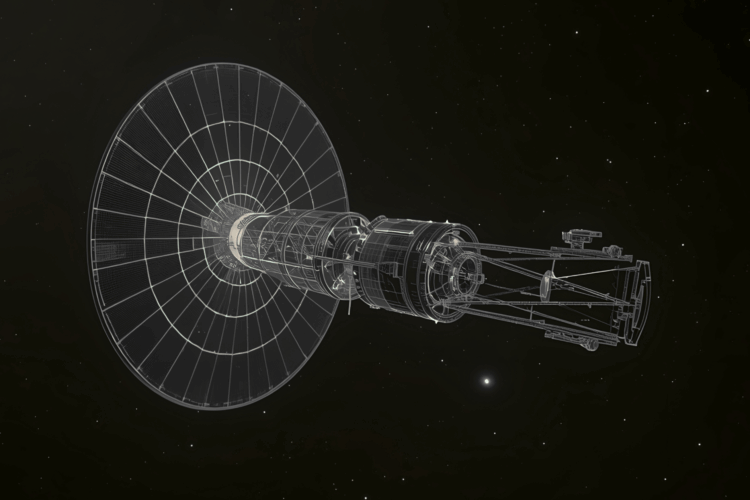
Key Takeaways Avantier partnered on the development of a custom five-mirror optical system for a high-end space telescope designed for demanding space observation applications. The project required the integration of ultra-high optical precision, lightweight structural architecture, and long-term environmental stability within a compact system envelope. To meet these requirements, Avantier provided end-to-end engineering support covering […]

Read more
6-DOF Positioning Systems in Space Telescopes: From Alignment to Wavefront Stability

Key Takeaways Modern space telescopes depend on 6-DOF positioning systems not simply for alignment, but for maintaining optical performance throughout launch, deployment, thermal cycling, and long-term operation. These systems serve as critical error-budget management tools, compensating for residual misalignments, structural drift, thermal distortion, and pointing instability. Technologies such as hexapods, fine steering mirrors, and segmented […]

Read more
Custom Long-Wave Infrared Space Telescope Design for Aerospace Applications

Key Takeaways Custom long-wave infrared (LWIR) space telescopes are critical for advanced aerospace remote sensing applications, including Earth observation, environmental monitoring, and target detection.  Designing these systems requires overcoming significant challenges in thermal stability, infrared material selection, aberration correction, dual-band performance, and space-environment survivability.  Through advanced optical design, passive athermalization, precision aspherical manufacturing, aerospace-grade coatings, […]

Read more
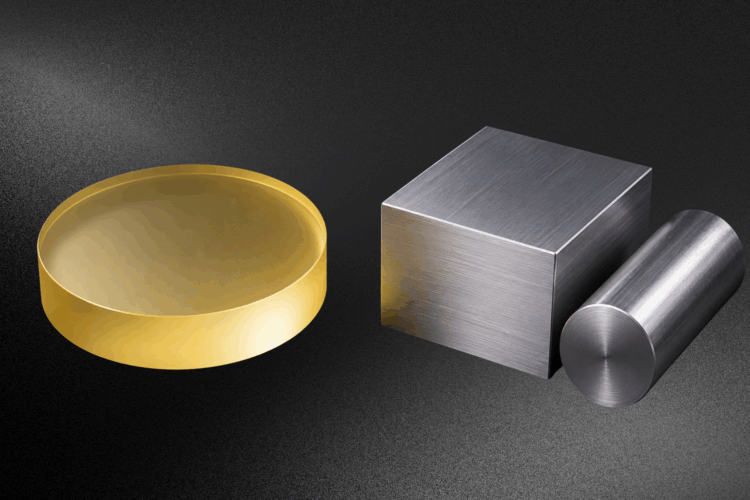
Material Selection for Space Optics: Zerodur vs. Aluminum

Key Takeaways Material selection between Zerodur and aluminum is driven by application requirements rather than material hierarchy.  Zerodur provides near-zero thermal expansion and exceptional dimensional stability, making it suitable for precision optical systems.  Aluminum offers cost efficiency, lightweight integration, and rapid manufacturability, making it ideal for scalable and time-sensitive missions.  The optimal choice depends on […]

Read more
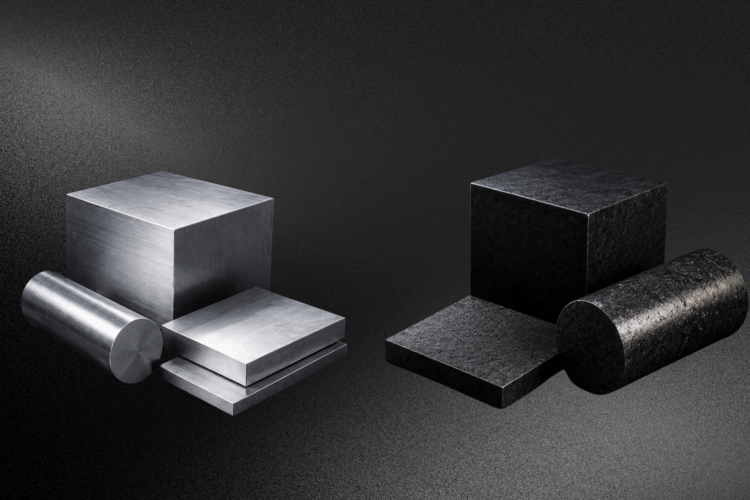
Material Selection for Space Optics: Aluminum vs. Silicon Carbide (SiC)

Key takeaways Material selection in space optics is application-driven, not hierarchical.  Aluminum offers cost efficiency, fast manufacturing, and ease of integration, making it suitable for rapid deployment and budget-sensitive systems.  Silicon carbide (SiC) provides high stiffness and low thermal expansion, supporting stable performance in thermally demanding environments.  The optimal choice depends on balancing thermal behavior, […]

Read more
How Are Sub-Nanometer Precision Mirrors Manufactured?

Introduction: The Challenge of Manufacturing at the Atomic Scale Producing optical mirrors with sub-nanometer precision is one of the most demanding tasks in modern manufacturing. At this level: Surface errors must be controlled to fractions of a nanometer Even atomic-scale irregularities can affect performance Conventional machining and polishing methods are no longer sufficient To overcome […]

Read more
What Are Sub-Nanometer Precision Mirrors?
What Are Sub-Nanometer Precision Mirrors

Introduction: The Invisible Backbone of Advanced Technology In the world of advanced technology, some of the most critical components are also the least visible. Among them are ultra-precision optical mirrors—devices so accurate that their surface errors are measured in fractions of a nanometer. These mirrors are essential to some of the most demanding applications in […]

Read more
Adaptive Optics and Wavefront Control in Aerospace Optical Systems
Adaptive Optics & Wavefront Control for Aerospace Systems

Introduction: Adaptive Optics and Wavefront Control in High-Performance Systems Adaptive optics and wavefront control are fundamental to achieving diffraction-limited performance in modern aerospace optical systems. In applications ranging from space telescopes and ISR payloads to laser communication and directed energy platforms, system performance is ultimately constrained by the ability to measure, predict, and correct wavefront […]

Read more
High-Performance RC Telescope Optical System with Verified Wavefront Control

Key Takeaways This technical note presents the design, implementation, and validation of a high-performance Ritchey–Chrétien (RC) telescope system optimized for deep space observation and spaceborne applications. The system achieves high imaging fidelity through precise optical design, controlled wavefront error, and structurally stable, lightweight construction. Key system parameters include: Effective focal length: 8840.56 mm Aperture ratio: […]

Read more
Material Selection for Space Optics: SiC vs. Zerodur

Key Takeaways Material selection between SiC and Zerodur is application-driven rather than hierarchical.  SiC offers high stiffness, lightweight capability, and good thermal conductivity, making it suitable for systems exposed to thermal gradients and structural constraints.  Zerodur provides near-zero thermal expansion, ensuring exceptional dimensional stability in thermally stable environments.  The optimal choice depends on whether the […]

Read more