

Key takeaways
- Material selection in space optics is application-driven, not hierarchical.
- Aluminum offers cost efficiency, fast manufacturing, and ease of integration, making it suitable for rapid deployment and budget-sensitive systems.
- Silicon carbide (SiC) provides high stiffness and low thermal expansion, supporting stable performance in thermally demanding environments.
- The optimal choice depends on balancing thermal behavior, structural requirements, manufacturability, and cost. Effective system design often mitigates material limitations, meaning both materials remain essential depending on mission needs.
1. Material Capability
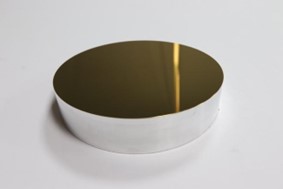
Avantier supports the design and manufacturing of optical components using a wide range of materials, including aluminum, silicon carbide (SiC), Zerodur, and other advanced substrates.
We work closely with customers to select and implement the most suitable material based on system requirements, performance targets, and mission constraints.
2. Application-Driven Material Selection
There is no universally “better” material in space optics.
Material selection is always application-dependent and involves balancing multiple factors such as thermal behavior, structural performance, manufacturability, and cost.
- Aluminum is often selected for cost efficiency, fast turnaround, and ease of integration
- Silicon Carbide (SiC) is typically used where high stiffness and thermal stability are critical
Both materials play essential roles in modern space optical systems.
Compare with SiC vs Zerodurfor ultra-stable optical system design.
3. Key Engineering Considerations
a. System Requirements and Mission Profile
Material selection depends strongly on mission priorities:
- Cost-sensitive or rapid deployment systems often benefit from aluminum
- High-performance imaging systems may require materials such as silicon carbide.
The choice reflects system-level trade-offs rather than material superiority.
b. Thermal Behavior and Stability
Thermal performance is one of the most important factors in optical system design.
- Aluminum has a relatively high coefficient of thermal expansion (CTE), which may require compensation through mechanical or thermal design
- SiC offers low CTE and high thermal stability, enabling more stable performance under temperature variations
Both approaches are valid depending on system architecture and design strategy.
c. Structural Performance
- Aluminum provides good strength-to-weight ratio and is widely used in integrated structures
- SiC offers very high stiffness, which is advantageous for maintaining optical alignment in demanding environments
d. Surface Accuracy and Optical Performance
- Aluminum mirrors can be rapidly fabricated using Single Point Diamond Turning (SPDT), enabling efficient production
- SiC supports advanced polishing processes, allowing high surface quality suitable for demanding optical applications
The required surface accuracy and wavelength range will influence the material choice.
4. Aluminum vs. Silicon Carbide (SiC) – Technical Comparison
Parameter | Aluminum | Silicon Carbide (SiC) |
Material Cost | Low, fast iteration | Higher, longer lead time |
Density | 2.7 g/cm³ | ~3.0 g/cm³ |
Thermal Conductivity | Very high (~205 W/m·K) | High (~120 W/m·K) |
CTE | 23.6 × 10⁻⁶ /K | ~4 × 10⁻⁶ /K |
Specific Stiffness | Moderate | Very high |
Manufacturing | Excellent machinability, SPDT capable | Requires specialized processing |
Thermal Stability | Sensitive to temperature changes (high CTE) | High dimensional stability under thermal variation |
Typical Applications | Rapid deployment, cost-sensitive systems | High-performance, thermally stable systems |
5. Aluminum Mirror Manufacturing Capability
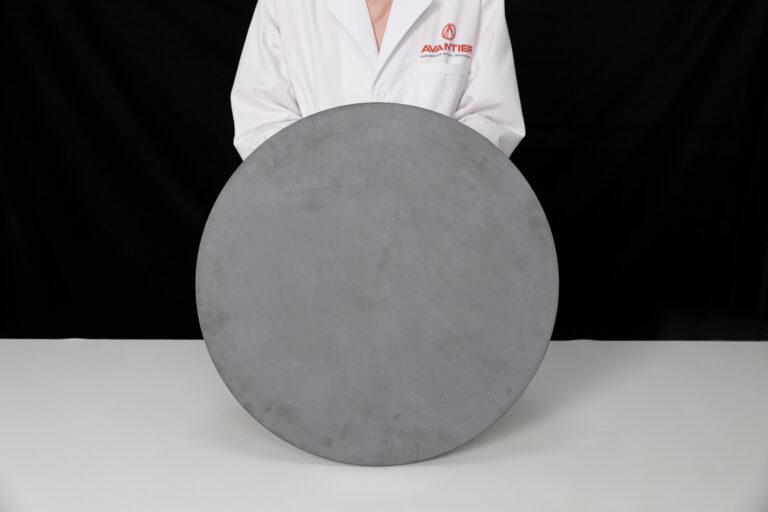
Avantier provides comprehensive aluminum mirror manufacturing capabilities, supporting a wide range of sizes and applications.Aluminum Mirror Size Classes and Specifications
Size Class |
Aperture Range |
Recommended Alloy |
Surface Roughness (RMS) |
Surface Figure (λ = 632.8 nm) |
Typical Applications |
Small |
Ø < 80 mm |
RSA-6061 / RSA-905 |
< 3 nm / < 2 nm (polished) |
≤ λ/40 RMS |
Laser communication, compact optics |
Medium |
Ø 80–160 mm |
RSA-6061 / 6061-T6 |
3–8 nm |
≤ λ/20 RMS |
Small satellite telescopes |
Large |
Ø 160–350 mm |
6061-T651 / RSA-443 |
5–10 nm |
≤ λ/10 RMS |
Remote sensing mirrors |
Extra-Large |
Ø 350–682 mm |
6061-T651 / Additive Al |
8–12 nm (SPDT), < 5 nm polished |
PV ≤ 0.6 µm |
Large optical payloads |
Manufacturing Limit |
Up to ~2000 mm |
Hybrid aluminum |
10–15 nm |
≤ λ/10 RMS |
Ultra-large telescopes |
6. Summary
Material selection in space optics is a system-level engineering decision.- Aluminum enables cost-effective, fast, and flexible solutions
- SiC provides high stiffness and thermal stability for demanding environments
Need Help Selecting the Right Optical Material?
Selecting the optimal material for your space optical system requires balancing performance, thermal stability, manufacturability, and cost.
Whether you are evaluating aluminum, SiC, or other advanced materials, the right choice depends on your specific mission requirements.
Avantier supports end-to-end optical development—from material selection and design optimization to precision manufacturing and testing.
FAQ
1. How do I choose between aluminum and silicon carbide (SiC) for my optical system?
The choice between aluminum and SiC mirrors in space optics depends on system requirements such as thermal stability, stiffness, cost, and manufacturing constraints.
Aluminum mirrors are commonly used for cost-sensitive applications and rapid prototyping due to their excellent machinability.
SiC mirrors are typically selected for systems requiring high stiffness and low thermal deformation, especially in thermally demanding environments.
In practice, selecting between aluminum and SiC mirrors involves balancing performance, manufacturability, and mission constraints rather than choosing a universally better material.
2. Is aluminum suitable for space optical applications despite its high CTE?
Yes, aluminum mirrors are widely used in space optical systems, particularly in applications where cost efficiency, lightweight design, and fast production are important.
While aluminum has a relatively high coefficient of thermal expansion (CTE), its effects can be mitigated through proper thermal design, structural optimization, and stress-relief processes.
As a result, aluminum mirrors are well suited for LEO constellations, laser communication systems, and other missions with moderate thermal stability requirements.
3. When is silicon carbide (SiC) a better fit than aluminum?
Silicon carbide (SiC) mirrors offer high stiffness, low thermal expansion, and excellent thermal stability, making them suitable for high-performance space optical systems.
These properties enable stable optical performance under temperature variations and reduce the need for complex thermal compensation.
SiC mirrors are commonly used in high-resolution Earth observation, scientific instruments, and applications requiring precise optical alignment.

GREAT ARTICLE!
Share this article to gain insights from your connections!