Small Telescopes – Compact Precision from Avantier
Looking for small telescopes that deliver professional-grade optical performance in a compact format? At Avantier Inc., we specialize in engineering high-precision small telescopes tailored for research, aerospace, industrial, and educational applications. Our compact telescope systems support scientific instrumentation and mission-critical imaging applications where size, weight, and performance are equally important.
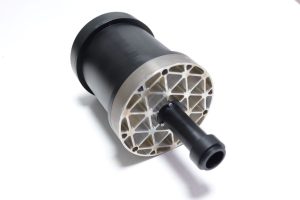
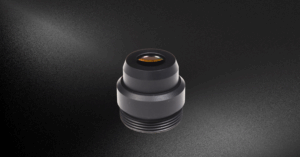
Aluminum RC Telescope, ∅110 x 210.5 mm
Why Choose Avantier for Small Telescopes?
Precision Engineering – Every telescope is manufactured with strict optical tolerances and athermal designs to ensure stability in aerospace imaging systems and mission-critical applications.
Customization – From aperture size and coatings to sensor interfaces, we deliver optical systems tailored to your exact specifications.
Space & Field Ready – We work with aerospace firms, academic institutions, and research labs globally, designing telescopes for satellite imaging, scientific instrumentation, and other mission-critical imaging applications.
Trusted Optical Partner – With over 25 years of optical engineering experience, we’re known for reliability, fast prototyping, and industry-leading support.
What Are Small Telescopes Used For?
Ideal for:
Aerospace and CubeSat imaging systems
Portable scientific instruments
Lab-based optical experiments
AR/VR and smart device integration
Educational or observational astronomy
Key Features
Aperture sizes: 50 mm – 150 mm; larger custom apertures available
Focal lengths: Configurable for wide-field or narrow imaging
Compatible with C-mount, T-mount, or custom sensor threads
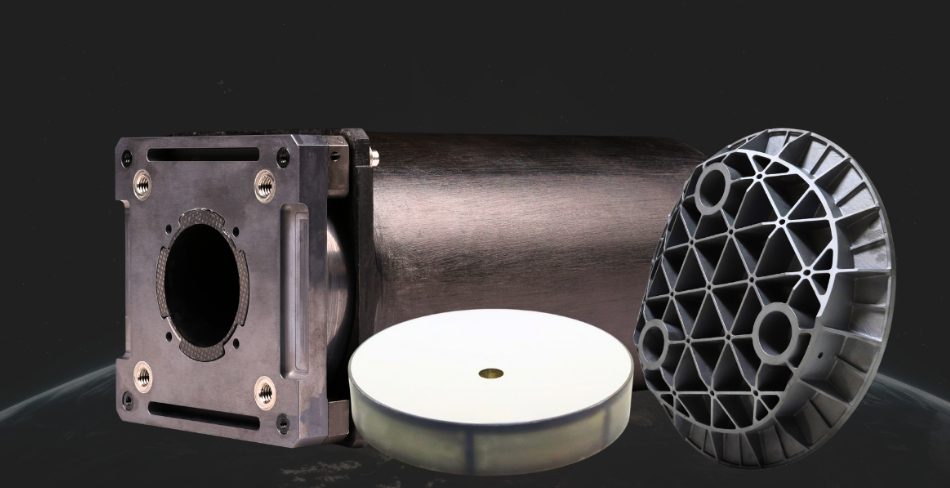
Material options: Aluminum, Zerodur, Silicon Carbide (SiC), ULE
Optimized for VIS to NIR imaging
Use Case: Compact RC Telescope for a Small-Satellite Imaging Mission
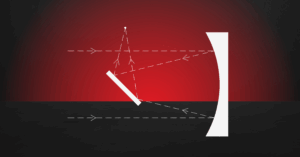
Avantier developed a representative compact Ritchey–Chrétien telescope design for a small-satellite imaging application requiring a long effective focal length and a relatively large entrance aperture within a highly constrained payload volume.
The telescope combined an effective focal length greater than 1,800 mm with an entrance aperture of approximately 195 mm. The complete optical system, including its mounting flanges, was packaged within a total length of approximately 305 mm and a payload envelope of less than 12U. The reflective optical architecture supported broadband imaging across the 400–950 nm spectral range.
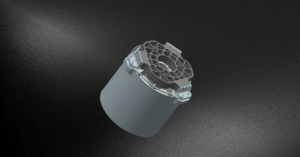
Six-degree-of-freedom precision adjustment frame
Key Engineering Requirements
Parameter
Specification
Optical architecture
Ritchey–Chrétien telescope
Entrance aperture
Approximately 195 mm
Effective focal length
Greater than 1,800 mm
Total system length
Approximately 305 mm, including flanges
Payload envelope
Less than 12U
Spectral range
400–950 nm
Mirror surface figure specification
λ/30 RMS at 632.8 nm
Thermal design requirement
Approximately 80°C operating-temperature range
To meet these requirements, the optical, mechanical, and thermal designs were developed as an integrated system. Key design considerations included focal-length compression, back focal distance, structural packaging, alignment sensitivity, and passive compensation for thermally induced focus shift. The design MTF at the specified Nyquist frequency exceeded 80% of the corresponding diffraction-limited MTF, and subsequent measurements were consistent with the predicted optical performance.The primary and secondary mirrors were finished using magnetorheological finishing and ion beam figuring. Vendor-supplied computer-generated holograms were used for null testing of the individual aspheric mirror surfaces. The broadband reflective coating was designed to target an expected average reflectivity above 97% across the specified wavelength range.During ground integration, the complete optical assembly was aligned using a motorized six-degree-of-freedom positioning stage with interferometric wavefront feedback. Once the required optical performance was achieved, the assembly was mechanically fixed in its final position. Environmental verification included completed thermal-cycling and 10 g random-vibration testing, followed by optical-performance re-evaluation.This representative engineering example demonstrates Avantier’s ability to support compact telescope programs from optical and optomechanical design through precision manufacturing, alignment, integration, and environmental verification.
Key Benefits
Compact optical payload optimized for limited satellite volume
Stable imaging performance without active focus adjustment
Designed to withstand launch vibration and shock environments
Reduced development risk through integrated engineering
Suitable for Earth observation, scientific research, and space situational awareness missions
What makes a small telescope “high-performance”? While compact in size, our small telescopes use high-end optics and coatings to ensure sharp resolution, low distortion, and thermal stability in varying conditions.
Are these telescopes suitable for space or satellite use? Yes. Our lightweight, athermal designs and mirror materials like silicon carbide (SiC) make them ideal for small satellite payloads and orbital imaging systems, and other mission-critical aerospace applications.
Can I integrate these with my imaging sensor or custom mount? Absolutely. We offer flexible interface options and will match your sensor specifications during the design phase.
Do you offer off-the-shelf options? We provide baseline designs for quick turnaround but also specialize in fully customized telescope systems tailored to scientific, industrial, and aerospace mission requirements.