Physics-driven comparison of freeform optical measurement and large-aperture metrology using confocal and interferometric approaches.
Avantier Inc.
Physics-driven comparison of freeform optical measurement and large-aperture metrology using confocal and interferometric approaches.
Throughput Decoupling:Next-generation High-NA Multi-Mirror Array Objectives break the resolution-speed trade-off, reducing 12-inch wafer inspection to <8 minutes. Yield Economics: High-NA optics increase defect capture from 70% to 99.2%, driving 15–20% annual yield recovery in sub-3nm nodes.
While the fundamental advantages of Free-Space Optical Communication (FSOC)—such as high bandwidth and RF-jamming immunity—are well-established (see our FSOC Fundamentals), the industry is now shifting from “proving the physics” to “optimizing the architecture.”
For aerospace engineers and system architects, the challenge has moved beyond simple Pointing, Acquisition, and Tracking (PAT) to the scalability, manufacturability, and intelligence of the terminals themselves.
The 114° Threshold: Not a choice, but a physical “ceasefire” where optical ambition meets manufacturing reality.
Physics of cos4 θ: Peripheral light loss and chromatic aberration form the primary “wall” for ultra-wide FOV.
Manufacturing Limits: Steep “Sag Values” in aspherical molding dictate production yields; 1% more FOV can drop yield to zero.
Engineering Legacy: True completion involves documenting these boundaries as organizational assets to empower the next generation of innovators.
Near-infrared (NIR) microscopy objectives (780–2500nm) are essential for “seeing through” opaque barriers.
By balancing high resolution with superior penetration, they enable deep-tissue biological imaging, subsurface semiconductor defect detection, and non-destructive material analysis.
Despite design challenges like specialized material selection (ZnS/Germanium) and complex aberration correction, modern NIR optics provide high-transmittance solutions (≥ 85%) that surpass the physical limits of visible light, driving innovation in both high-tech manufacturing and life sciences.
Precision Performance: Achieves diffraction-limited imaging using High-NA Cryogenic Quantum Optics to maximize photon collection efficiency.
Environmental Stability: FEA-optimized housings ensure sub-nanometer wavefront stability from room temperature down to 4K.
Broadband Correction: Tailored multi-wavelength optimization (UV-NIR) supports simultaneous cooling, trapping, and state readout.
Scalable Integration: Engineered for seamless implementation in trapped-ion, neutral atom, and solid-state quantum platforms.
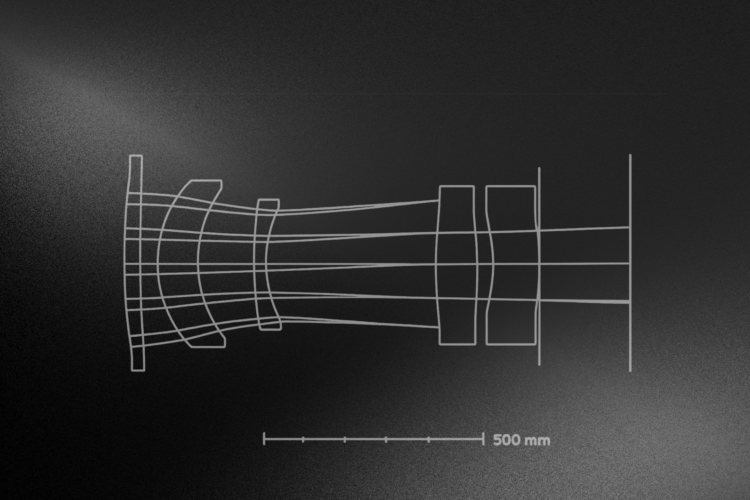
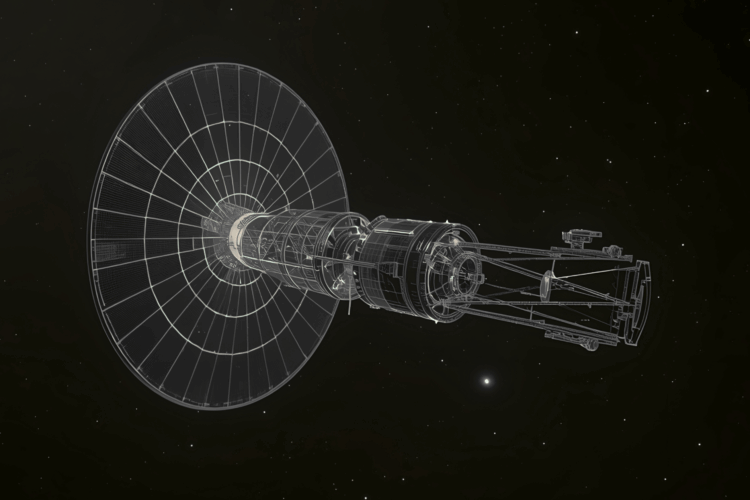
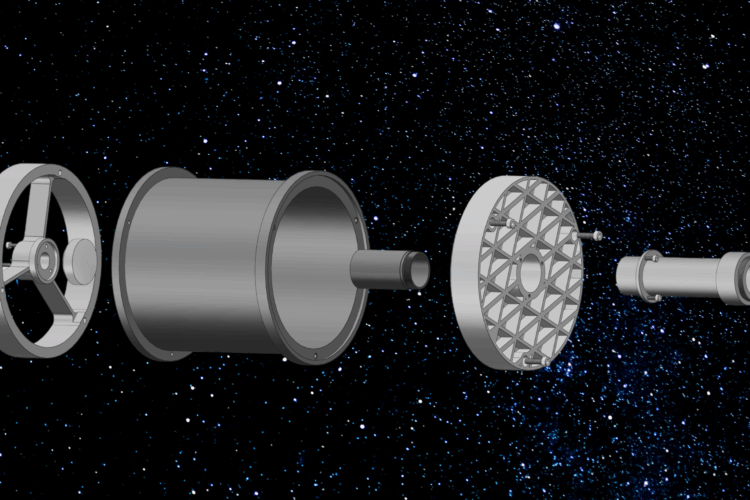
Space telescope design is governed by aperture size, aberration control, and environmental constraints unique to orbit.
Refracting systems offer stability but suffer severe aperture limits, while reflecting architectures dominate modern space observatories due to scalability and chromatic aberration elimination.
Catadioptric designs provide compact, balanced solutions for small to mid-sized missions.
As space optics evolve, segmented mirrors, active wavefront correction, and hybrid architectures are defining the next generation of high-performance space telescopes.
Cylindrical lens metrology protocols are essential for bridging the gap between theoretical optical design and high-performance manufacturing. As industrial applications push for tighter tolerances, moving toward advanced interferometric characterization is a requirement for system-level precision.
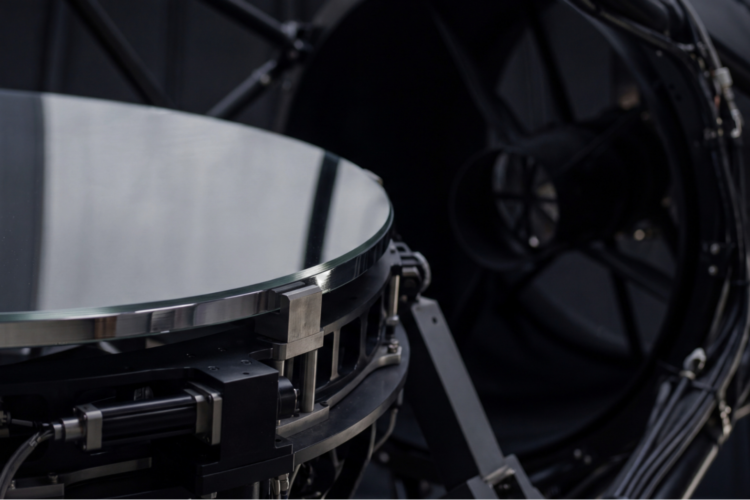
Supporting future mission like LUVIOR and HabEx, Avantier’s successful development of the Φ1.1 m RB-SiC mirror will foster new discoveries, offering clearer views of our universe with unprecedented efficiency and precision.
Optical coatings manipulate the fundamental properties of light—reflection, transmission, polarization, and spectral distribution—through thin-film engineering that enhances performance in advanced optical systems.