WE CAN HELP YOU!
Contact us NOW for sales & expert advice.
Property |
Aluminum |
SiC (Silicon Carbide) |
Zerodur |
CTE (Thermal Expansion) |
High |
Low |
Ultra-low |
Density |
Low |
Medium |
High |
Strength / Stiffness |
Moderate |
High |
Moderate |
Thermal Stability |
Low |
High |
Very High |
Manufacturability |
Widely Machinable |
Expert Fabrication |
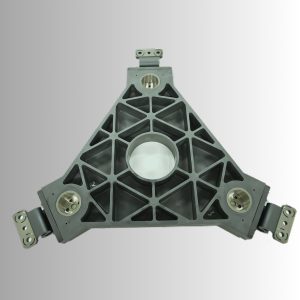
Avantier designs and manufactures high-performance optical components engineered for demanding space missions, satellite imaging, astronomy, defense systems, and advanced research. Our capabilities span ultra-lightweight mirrors, large-aperture optics, off-axis parabolic mirrors, optical domes, and precision filters, all optimized for stability, accuracy, and thermal resilience.
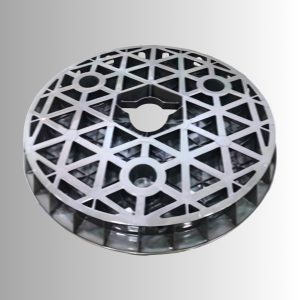
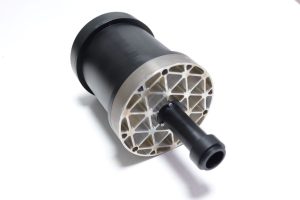
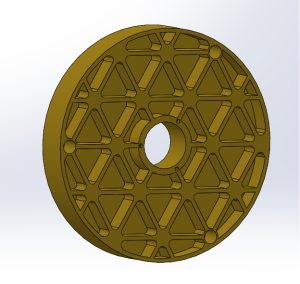
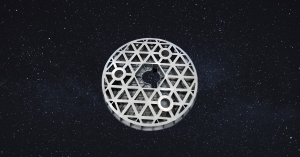
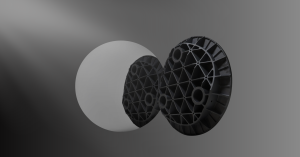
Lightweight Zerodur Mirror (Product details):
| Dimension and Weight | Ø150 mm × 40 mm CT, 0.5 kg |
| Surface Shape | ≤ λ/20 @ 632.8 nm |
| Surface Flatness | ≤ 0.05 nm |
| Coating | Protected Silver |
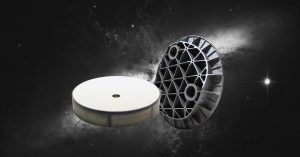
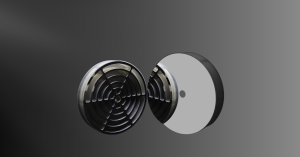
Custom SiC Mirrors (Product details) :
| Diameter | 25–800 mm |
| Shapes | Flat, Spherical, Aspheric |
| Surface Flatness | Up to λ/100 RMS |
| Coatings | Al, Ag, Au, High-LDT Dielectrics |
Ultra-precision aspheres and large optics for astronomy, satellite imaging, high-energy lasers, remote sensing, and metrology. (Product Details)
| Diameter | Φ10–Φ2000 mm |
| Surface Accuracy | RMS ≤ 1/200λ |
| Materials | SiC, Zerodur, Fused Silica, ULE, Aluminum, H-K9L |
| Surface Roughness | 0.2 nm |
Correct spherical aberration, coma & field curvature
| Diameter | Φ10–Φ1000 mm |
| Surface Accuracy | RMS ≤ 1/200λ |
| Diameter | Φ10–Φ800 mm |
| Accuracy | PV ≤ 1/3λ, RMS ≤ 1/200λ |
| Surface Quality | 60/40 to 10/5 |
Stability for calibration, alignment & laser systems
| Diameter | Φ10–Φ2000 mm |
| Accuracy | PV ≤ 1/3λ, RMS ≤ 1/200λ |
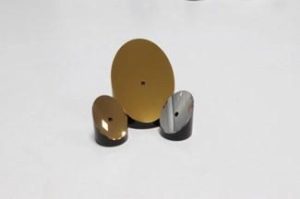
Precision OAP mirrors ideal for beam collimation, focusing, infrared systems, and high-energy optical setups. (Product Details)
Specifications
| Material | Aluminum, SiC |
| Surface Accuracy | 1/10λ RMS |
| Surface Shape | 1/8λ |
| Surface Quality | 60/40 |
| Coatings | Enhanced Aluminum, Protected Gold, UV-Enhanced Aluminum |
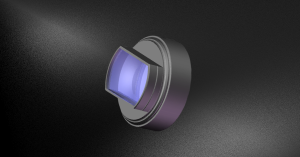
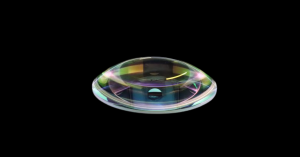
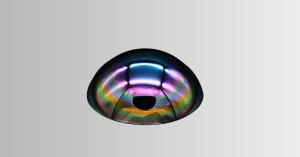
High-strength domes designed for star trackers, optical sensors, missile guidance, and spaceborne imaging. (Product Details)
Key Specs
| Surface Accuracy | 1/10–1λ |
| Dimensional Tolerance | ±0.1 mm |
| Surface Quality | 20/10 to 60/40 |
| Clear Aperture | ≥ 90% |
| Coatings | AR coatings available across UV–LWIR |
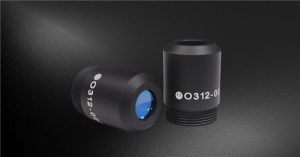
Custom filters and coatings engineered for multispectral, hyperspectral, UV, VIS, NIR, SWIR, MWIR, and LWIR space applications.
Capabilities:
Proven performance in satellite imaging, space telescopes, laser systems, LiDAR, guidance, and metrology
Material selection (e.g., SiC vs. Zerodur) plays a key role in determining telescope performance, weight, and thermal behavior.
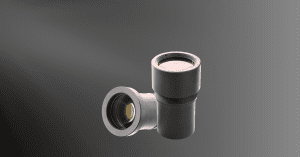
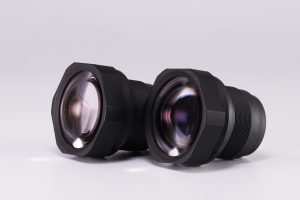
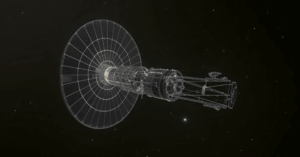
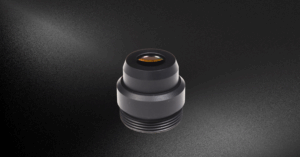
Avantier manufactures Ritchey-Chrétien (RC) telescopes and SiC telescopes designed for demanding space missions, including those for small satellites.
Feature |
RC Telescopes |
SiC Telescopes |
Type |
Cassegrain Telescope |
Rich-Cleven type Telescope |
Material |
Zerodur, ULE, SiC and Aluminum |
SiC |
Dimensions |
∅110×210.5 mm |
∅94 x 208 mm |
Weight |
0.3 kg (Total Lens) |
0.7 kg |
Aperture Range |
Consumer-Grade: ∅100 – ∅200 mm; Research-Grade: Up to ∅500 mm |
Focal Length & F/# |
760 mm – 1600 mm; F/5.6 – F/8 |
200-24000mm; F/1.8- F/2.5 |
Interface |
1-32 UN, compatible with C-mount cameras, flange-to-image distance 17.5mm |
Customized interface |
Spectral Coverage |
Visible to Near-Infrared (VIS–NIR) |
Ultraviolet to near-infrared |
On-Axis RMS |
<0.1λ |
<0.08λ |
Off-Axis RMS (0.5°) |
<0.2λ |
<0.12λ |
Mirror Reflectivity |
>95%(760-1600nm) |
>95% (400–12,000 nm) |
MTF |
>13%,108lp/mm |
>20% at 104.9 lp/mm |
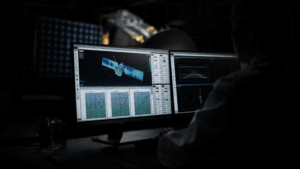
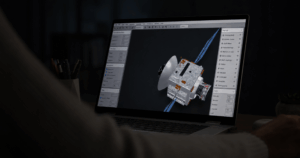
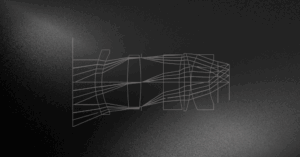
Avantier provides comprehensive optical system design and optimization services for aerospace optical payloads. While we don’t solely focus on manufacturing, we emphasize our role in helping customers optimize and design optical systems to precisely meet their unique requirements and applications. This includes:
Avantier’s state-of-the-art manufacturing, integration, and testing capabilities ensure mission readiness for demanding space optical systems.
We utilize advanced fabrication techniques to produce high-precision optical and mechanical components, including aspheric elements, freeform optics, and SiC mirrors.
Precision alignment and integration are critical to ensuring optical performance under extreme conditions.
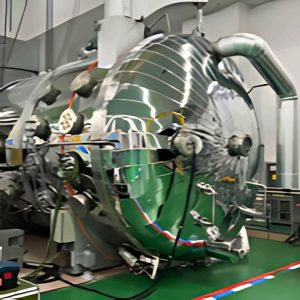
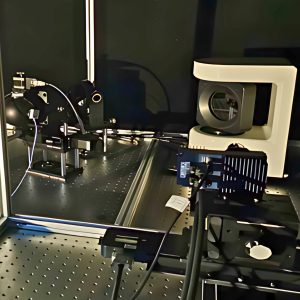
Comprehensive testing ensures optical performance and reliability in simulated space environments.
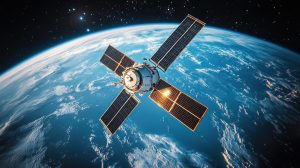
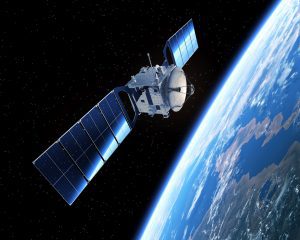
Our high-performance optical systems are crucial for diverse space applications:
Application Area | How Avantier Optics Contribute |
Navigation with Optical Sensors | Satellites use star trackers (high-precision cameras) for orientation and course correction. Space telescopes utilize complex mirror and lens systems to focus faint light from distant objects. |
Optical Communication | Free-space laser communication enables high-bandwidth data transfer between spacecraft and Earth, or between spacecraft themselves. |
Space Telescopes | Renowned applications of optical technologies, like the Hubble Space Telescope, which collects visible and ultraviolet light. |
Observation and Science | Spectrometers analyze light to determine object composition. Lasers are used in lunar missions to search for ice deposits. |
Photovoltaic Devices | Solar cells convert sunlight into electricity, powering spacecraft systems and recharging batteries. |
Avantier leverages cutting-edge capabilities:
Avantier delivers advanced space-grade optical components, engineered for reliability in the most demanding environments. Our tailored optical solutions support a wide range of applications, including Earth science, space-based optical communication, photonic satellite payloads, space-based quantum communication, and photonic technologies for space telescopes and imaging systems.
Enhance your space missions with Avantier’s expertise in space telescopes and optical design & optimization services for space. Contact us today to learn more about our capabilities and how we can support your project from concept to launch.
How does thermal cycling affect the long-term stability of aluminum optical components?
Thermal cycling can significantly impact the long-term stability of aluminum optical components due to internal residual stresses introduced during manufacturing.
Controlled thermal cycling (stress relief) is often used to reduce these residual stresses, improving dimensional stability over time. This process is typically tailored to the expected operational temperature range of the mission.
When properly treated and designed, aluminum optical components can maintain stable optical performance throughout the mission lifecycle, although they generally exhibit lower thermal stability compared to materials such as SiC or Zerodur.
How should I select the right material for a space optical system?
There is no universally “best” material for space optics. Each material—such as Aluminum, SiC, and Zerodur—offers different trade-offs in thermal behavior, stiffness, weight, manufacturability, and cost.
The optimal choice depends on the specific mission requirements and operating environment. Key factors to consider include:
In practice, material selection is a system-level trade-off rather than a single-parameter optimization. The best material is the one that meets the performance requirements while balancing manufacturability, risk, and cost. Avantier supports material selection and optimization as part of its optical design and engineering services.
When should you involve an optical manufacturing partner in your development process?
The ideal time to engage a manufacturing partner is as soon as you realize you need optics; it is recommended to get involved during the concept or initial design phase.
Waiting beyond the design stage increases the risk of costly iterations, potentially affecting both performance and manufacturability throughout the development process.
How does early manufacturer involvement actually improve the design?
At Avantier, our engineers are part of the conversation from start to finish. They provide feedback on tolerances, materials, surface specifications, and geometries before they are completely finalized. This allows us to help optimize the design for both optical performance and manufacturability, helping you arrive at stronger, more efficient design solutions.
We also understand the importance of your timeline. System requirements, operating environment, and performance targets are all considered from the beginning, reducing surprises during qualification and enabling a smooth transition into production. Coming to us early is what makes an ideal timeline achievable.
What’s the risk of waiting until after the design phase to involve a manufacturing partner?
Designs that have not accounted for manufacturing realities often require redesigns and in aerospace and defense applications, that can be both expensive and time-consuming. Materials, surface specifications, geometries, and engineering capabilities all present challenges that are much easier to address early in the development process.
Contact us NOW for sales & expert advice.