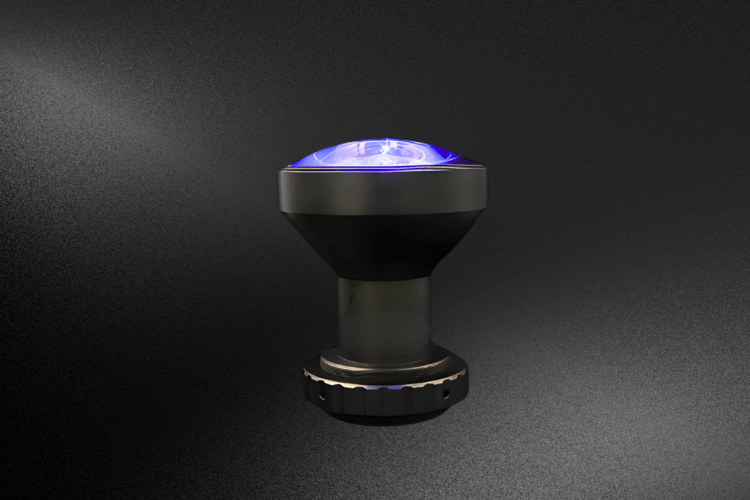
Opto-Mechanical Engineering Case Study: Custom Ultra-Wide Lens for 360° Imaging

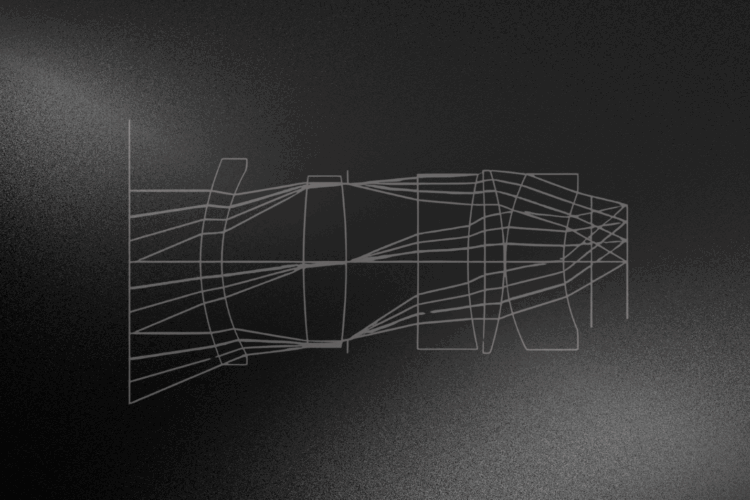
Key Takeaways This opto-mechanical engineering case demonstrates the importance of tightly coupled optical and mechanical design for 360° imaging systems.  Precise entrance pupil and rotation axis control are critical for parallax-free stitching.  Early CAD synchronization reduces integration risk, while DFM-driven decisions improve manufacturability, cost, and delivery timelines.  System-level optimization—including mass distribution and packaging—ensures performance translates […]

Read more
Custom Optical Systems for AR Devices

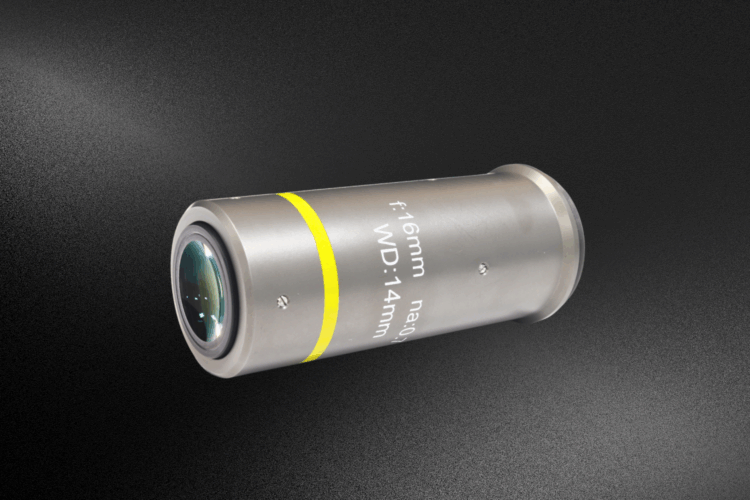
Key Takeaways Hybrid 1-glass–3-plastic architecture reduces size and weight while maintaining optical performance. System-level design aligns FOV (48°) and focal length (4.65 mm) with human vision. Aspherical surfaces and tight tolerances (down to ~3 μm) control aberrations and ensure alignment. Low-reflection coatings (≤0.5%) improve transmission and limit stray light. The design supports stable performance from […]

Read more
Material Selection for Space Optics: SiC vs. Zerodur

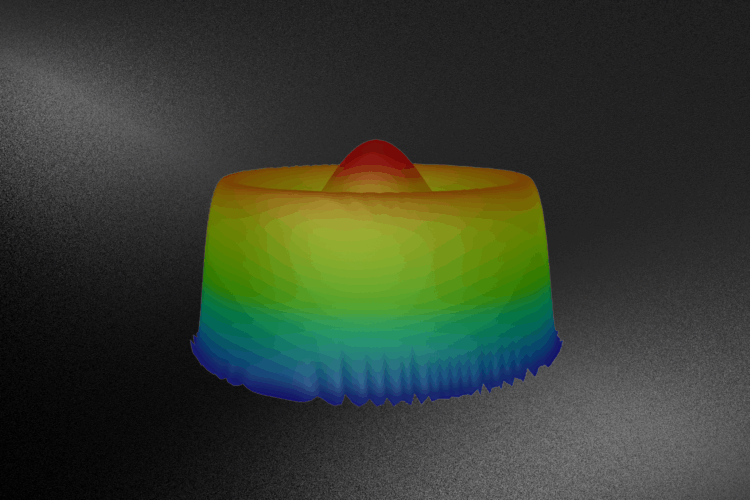
Key Takeaways Material selection between SiC and Zerodur is application-driven rather than hierarchical.  SiC offers high stiffness, lightweight capability, and good thermal conductivity, making it suitable for systems exposed to thermal gradients and structural constraints.  Zerodur provides near-zero thermal expansion, ensuring exceptional dimensional stability in thermally stable environments.  The optimal choice depends on whether the […]

Read more
Case Study: Development of Sub-meter High-Resolution Optical Payload

Key Takeaways This case study presents the development of a sub-meter high-resolution optical payload that redefines the balance between optical precision and mass efficiency. Leveraging space-proven technical heritage, the project successfully integrated a coaxial reflective optical system with a correction lens group to achieve diffraction-limited imaging performance. The resulting lightweight remote sensing camera achieves a […]

Read more
The Evolution of Space Laser Terminal Architecture
3D abstract render of satellite transmitting data or signal by laser to Earth planet. Transfer 5G web communications, global network connection. Concept of modern innovative space technologies.

While the fundamental advantages of Free-Space Optical Communication (FSOC)—such as high bandwidth and RF-jamming immunity—are well-established (see our FSOC Fundamentals), the industry is now shifting from “proving the physics” to “optimizing the architecture.”
For aerospace engineers and system architects, the challenge has moved beyond simple Pointing, Acquisition, and Tracking (PAT) to the scalability, manufacturability, and intelligence of the terminals themselves.

Read more
NIR Microscopy: Applications and Design Challenges in the 780–2500nm Range

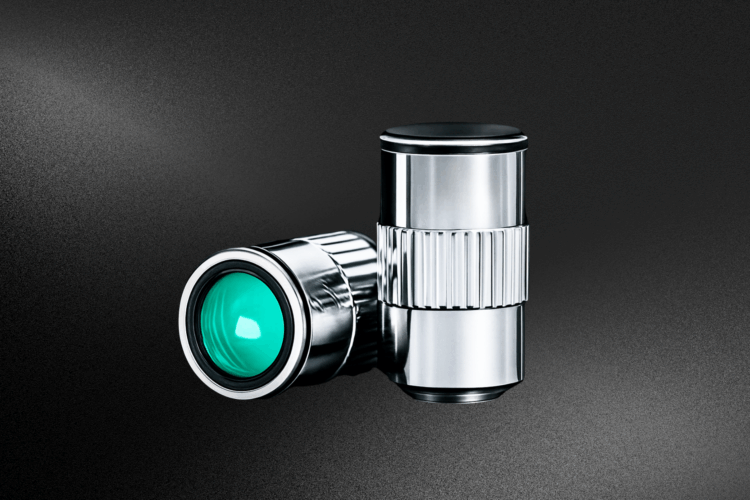
Near-infrared (NIR) microscopy objectives (780–2500nm) are essential for “seeing through” opaque barriers.
By balancing high resolution with superior penetration, they enable deep-tissue biological imaging, subsurface semiconductor defect detection, and non-destructive material analysis.
Despite design challenges like specialized material selection (ZnS/Germanium) and complex aberration correction, modern NIR optics provide high-transmittance solutions (≥ 85%) that surpass the physical limits of visible light, driving innovation in both high-tech manufacturing and life sciences.

Read more
Overcoming Optical Bottlenecks in Quantum Computing
Overcoming Optical Bottlenecks in Quantum Computing header

Precision Performance: Achieves diffraction-limited imaging using High-NA Cryogenic Quantum Optics to maximize photon collection efficiency.

Environmental Stability: FEA-optimized housings ensure sub-nanometer wavefront stability from room temperature down to 4K.

Broadband Correction: Tailored multi-wavelength optimization (UV-NIR) supports simultaneous cooling, trapping, and state readout.

Scalable Integration: Engineered for seamless implementation in trapped-ion, neutral atom, and solid-state quantum platforms.

Read more