
Explore Avantier’s extensive engineering capabilities through large optical components; multiple case studies showcase Avantier’s durable, accurate and stable engineering tailored for various applications.


Explore Avantier’s extensive engineering capabilities through large optical components; multiple case studies showcase Avantier’s durable, accurate and stable engineering tailored for various applications.

Optical Communication in Space: From Free-Space Lasers to Deep-Space Data Links
Optical communication in space represents a transformative shift from traditional radio frequency (RF) transmission to high-speed, laser-based data exchange. Using light instead of radio waves, these systems can send vast amounts of data across interplanetary distances with unparalleled efficiency.
Collectively referred to as Free-Space Optical Communication (FSOC), this technology uses modulated laser or LED beams to transmit digital information wirelessly through open space. Within this broad category, space-based laser communications (often called lasercomm) focus on orbital and satellite applications, while Deep Space Optical Communication (DSOC) pushes the frontier even farther—to interplanetary distances.

Space-based LIDAR and hyperspectral imaging combine precise 3D mapping with detailed spectral analysis to monitor Earth’s surface, enabling insights into ecosystems, resources, and climate while advancing applications in science, industry, and sustainability.

The reflector telescope is unique among telescopes because of its reflective design. Instead of using lenses to refract or bend light to form images, it uses a combination of curved surfaces and flat mirrors to reflect light for imaging.

Athermal optical systems are engineered to maintain consistent performance across a wide range of temperatures without the need for active thermal compensation.

Off-axis parabolic (OAP) mirrors are indispensable components in modern optical systems, offering precision and versatility in a variety of applications.

Gravitational wave detection represents one of the most groundbreaking advancements in modern astrophysics, driving the development of highly sophisticated technologies.
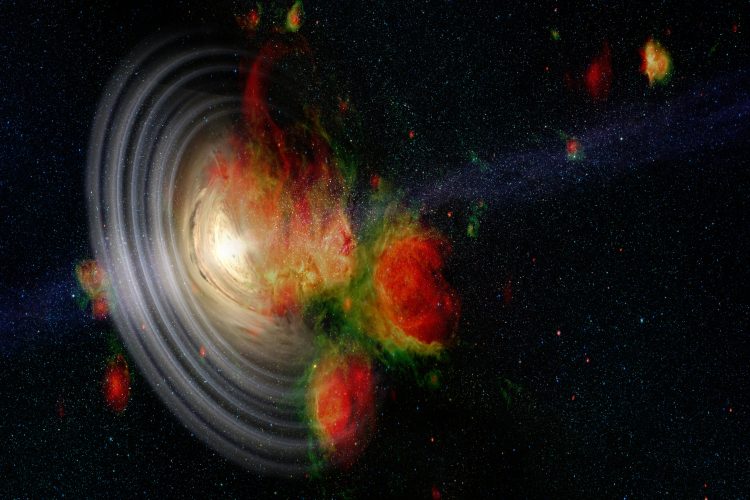
Space gravitational wave telescopes are designed to detect minuscule ripples in spacetime caused by gravitational waves. Under harsh space conditions, high precision optical components, radiation-resistant materials, and ultra-stable laser systems are required but also complicate production. Recent solutions in manufacturing, optics and advanced metrology have helped overcome challenges.
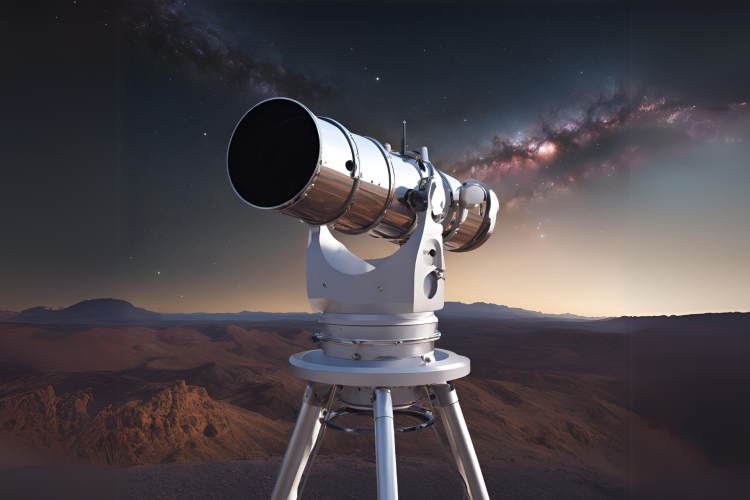
The Ritchey Chrétien (RC) telescope is a highly specialized variant of the Cassegrain reflector telescope, designed to deliver superior optical precision and clarity. Its advanced design minimizes optical aberrations, making it a preferred choice for both space-based and ground-based astronomy.
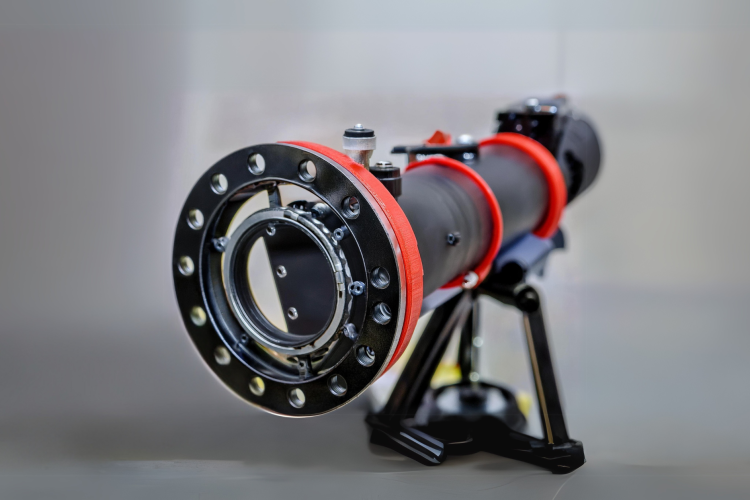
Ritchey Chrétien (RC) telescopes are advanced reflecting telescopes renowned for their exceptional image quality and minimized optical aberrations.