

Key Takeaways
- Material selection between Zerodur and aluminum is driven by application requirements rather than material hierarchy.
- Zerodur provides near-zero thermal expansion and exceptional dimensional stability, making it suitable for precision optical systems.
- Aluminum offers cost efficiency, lightweight integration, and rapid manufacturability, making it ideal for scalable and time-sensitive missions.
- The optimal choice depends on balancing thermal stability, structural design, and cost constraints. Both materials are widely used in space optics, with selection guided by system performance needs and mission conditions
1. Material Capability
Avantier supports the design and manufacturing of optical components using a wide range of materials, including Zerodur, aluminum, silicon carbide (SiC), and other advanced substrates.
We work closely with customers to evaluate system requirements and select the most appropriate material to meet performance, environmental, and mission constraints.
2. Application-Driven Material Selection
There is no universally “better” material between Zerodur and aluminum. Material selection in space optics is application-dependent and requires balancing thermal stability, structural performance, manufacturability, and cost.- Zerodur is typically used in systems requiring ultra-low thermal expansion and long-term dimensional stability
- Aluminum is often selected for cost efficiency, rapid manufacturing, and ease of integration
- Compare with Aluminum vs SiC to explore trade-offs in cost, manufacturability, and thermal performance. Learn more
- Compare with SiC vs Zerodur for high-performance, thermally stable optical system Read full article
3. Key Engineering Considerations
a. Thermal Stability and Dimensional Control
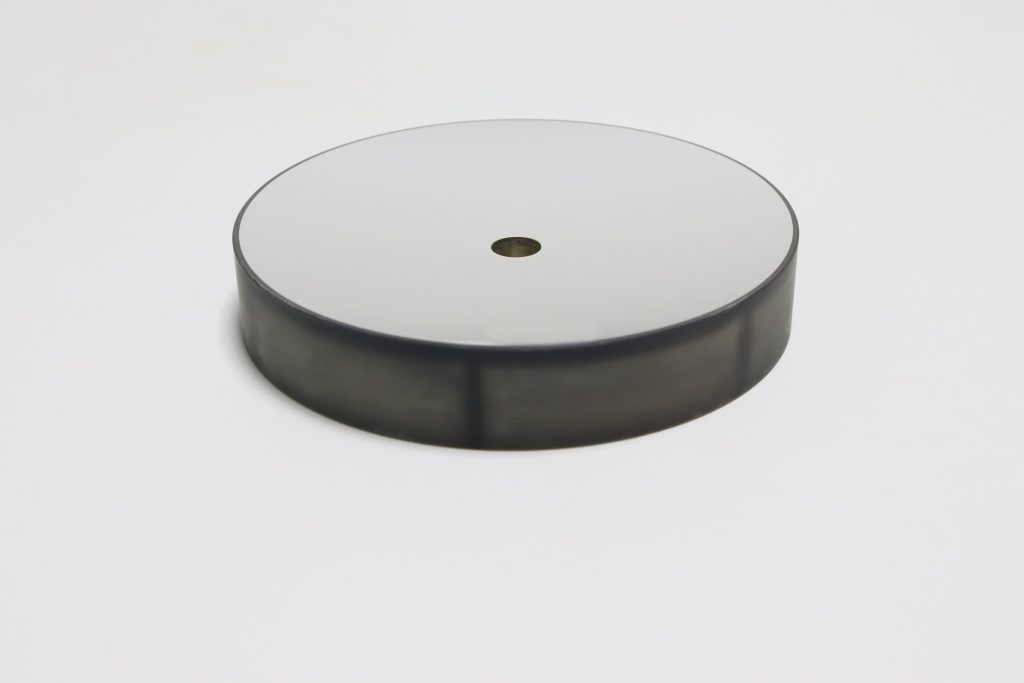
- Zerodur offers near-zero coefficient of thermal expansion (CTE), minimizing dimensional changes over temperature
- Aluminum has a relatively high CTE, which may introduce thermal deformation unless compensated through system design
b. Structural Performance and Weight
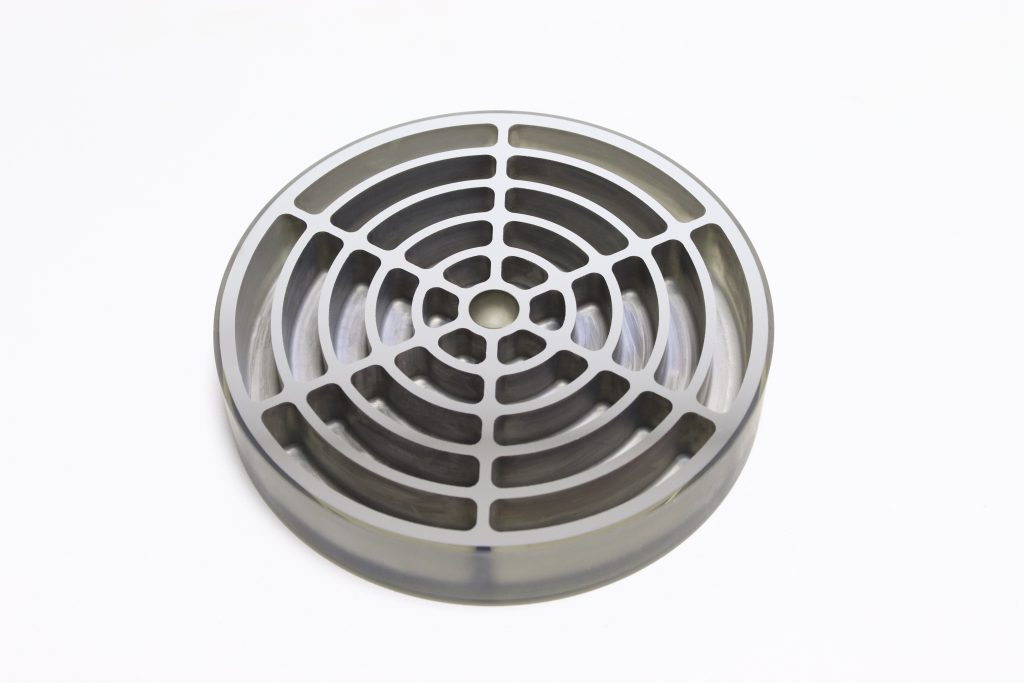
- Aluminum provides a good strength-to-weight ratio and is widely used for integrated opto-mechanical structures
- Zerodur offers excellent stability but generally requires additional structural support
c. Thermal Behavior and Environment
- Zerodur performs best in thermally stable or slowly varying environments
- Aluminum can perform well when thermal effects are managed through active or passive thermal control
d. Manufacturing and Integration
- Aluminum is easy to machine and supports rapid fabrication using processes such as Single Point Diamond Turning (SPDT)
- Zerodur requires conventional optical polishing and careful handling due to its material properties
4. Zerodur vs. Aluminum – Key Performance Comparison
The table below summarizes key material properties along with their practical implications for optical system design.
Property |
Zerodur |
Aluminum |
Design Implication |
Thermal Expansion (CTE) |
Near-zero (~0.02×10⁻⁶ /K) |
High (~23.6×10⁻⁶ /K) |
Zerodur minimizes dimensional drift; aluminum requires compensation strategies |
Thermal Conductivity |
Very low (~1.46 W/m·K) |
Very high (~205 W/m·K) |
Aluminum dissipates heat efficiently; Zerodur favors stability over heat transfer |
Specific Stiffness |
Moderate |
Moderate |
Structural design plays a larger role for both materials |
Weight Reduction Capability |
Limited |
Good |
Aluminum preferred for lightweight integrated structures |
Thermal Stability Mechanism |
Minimal expansion |
Managed through design |
Depends on system approach to thermal control |
Manufacturability |
Mature optical polishing |
Excellent machinability (SPDT) |
Aluminum enables faster production; Zerodur offers precision stability |
Cost |
High |
Low |
Aluminum suited for cost-sensitive systems |
Typical Applications |
Precision optics, metrology, stable telescopes |
Rapid deployment, LEO systems, integrated structures |
Selection depends on stability vs cost and integration needs |
5. Typical Application Areas
Zerodur Applications
- High-precision astronomical optics
- Interferometry and metrology systems
- Long-duration missions requiring dimensional stability
- Systems with strict thermal drift requirements
- Small satellite and LEO constellations
- Laser communication systems
- Rapid deployment missions
- Cost-sensitive optical payloads
6. Summary
Material selection between Zerodur and aluminum is a system-level engineering decision.- Zerodur provides exceptional dimensional stability with near-zero thermal expansion
- Aluminum enables cost-effective, lightweight, and rapidly manufacturable solutions
FAQ
1. How do I choose between Zerodur and aluminum for space optics?
The choice depends on thermal stability requirements, cost constraints, and system design.
Zerodur is typically used for ultra-stable optical systems, while aluminum is preferred for cost-effective and rapidly deployable solutions.
2. Is aluminum suitable for precision optical systems?
Yes, aluminum can be used in precision optical systems when thermal effects are properly managed through design and control strategies.
It is widely used in applications where cost and manufacturability are key drivers.
3. When is Zerodur preferred over aluminum?
Zerodur is typically selected when minimal thermal expansion and long-term dimensional stability are critical, such as in high-precision astronomy and metrology applications.

GREAT ARTICLE!
Share this article to gain insights from your connections!