

Key Takeaways
- Material selection between SiC and Zerodur is application-driven rather than hierarchical.
- SiC offers high stiffness, lightweight capability, and good thermal conductivity, making it suitable for systems exposed to thermal gradients and structural constraints.
- Zerodur provides near-zero thermal expansion, ensuring exceptional dimensional stability in thermally stable environments.
- The optimal choice depends on whether the system is more sensitive to thermal gradients or absolute expansion. Both materials are widely used in space optics, with selection based on performance requirements, environmental conditions, and system design priorities.
1. Material Capability
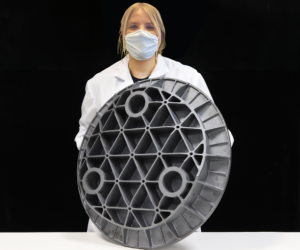
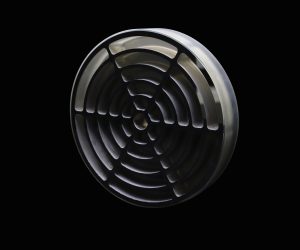
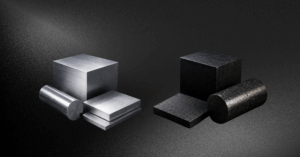
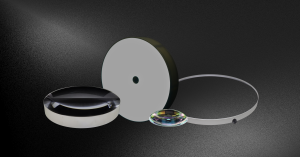
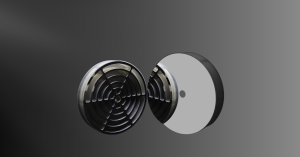
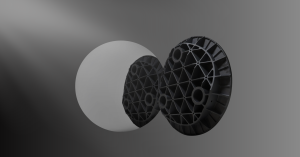
Avantier supports the design and manufacturing of optical components using a wide range of advanced mirror substrate materials, including silicon carbide (SiC), Zerodur® glass-ceramic, aluminum, and other precision optical materials.
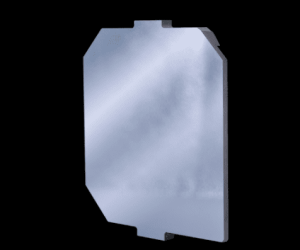
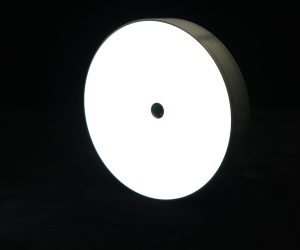
Zerodur is a representative low-expansion glass-ceramic material used when dimensional stability and minimal thermal expansion are key optical requirements. SiC, by contrast, is often selected when high specific stiffness, lightweighting, and thermal conductivity are primary design drivers.
In practice, material selection for space optics is not based on a single property. It requires evaluating optical performance, thermal behavior, structural stiffness, mass limits, manufacturability, coating requirements, and mission environment as part of the full system design.
2. Application-Driven Material Selection
There is no universally “better” material between SiC and Zerodur. The optimal choice depends on how the optical system responds to thermal gradients, structural loads, mass constraints, and long-term dimensional stability requirements.
SiC is commonly selected for systems that require high stiffness, lightweight structures, and efficient heat distribution. Zerodur is typically used in applications that require extremely low thermal expansion and stable optical figure over time.
Other materials, such as ULE® glass, CLEARCERAM® glass-ceramic, aluminum alloys, beryllium, and composite mirror structures, may also be considered depending on wavelength range, aperture size, operating temperature, manufacturing constraints, and cost targets.
Zerodur®
Compare with Aluminum vs SiC to explore trade-offs in cost, manufacturability, and thermal performance for different space optical applications. Material Selection for Space Optics: Aluminum vs. Silicon Carbide (SiC)
3. Key Engineering Considerations
The SiC vs. Zerodur trade-off is best understood as a comparison between two different stability mechanisms: SiC helps manage thermal gradients through high thermal conductivity and stiffness, while Zerodur minimizes dimensional change through near-zero thermal expansion.a. Thermal Stability and Environmental Conditions
Thermal behavior is a primary driver in material selection:- Zerodur offers near-zero coefficient of thermal expansion (CTE), making it well suited for applications requiring minimal dimensional change over time
- SiC provides low CTE combined with high thermal conductivity, enabling efficient heat distribution and reduced thermal gradients
b. Structural Performance and Weight
- SiC provides very high specific stiffness, making it ideal for lightweight, structurally stable optical systems
- Zerodur offers good dimensional stability but typically requires more robust structural support due to its lower stiffness
c. Thermal Gradients vs. Uniform Stability
- Zerodur performs well in environments with uniform temperature conditions
- SiC is often advantageous in systems exposed to thermal gradients due to its high thermal conductivity
d. Manufacturing and Integration
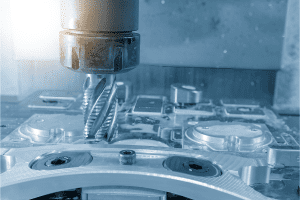
- SiC requires specialized processing, including sintering and precision polishing
- Zerodur is processed using conventional optical polishing techniques but may present challenges in handling and structural integration
4. SiC vs. Zerodur – Technical Comparison
The table below summarizes key material properties of SiC and Zerodur, along with their practical implications for optical system design.| Property | Silicon Carbide (SiC) | Zerodur® |
| Thermal Expansion (CTE) | Low but non-zero 2.4×10⁻⁶ /K | Near-zero 0.02×10⁻⁶ /K |
| Thermal Conductivity | Very high 120~180W/(m·K) | Very low 1.46W/(m·K) |
| Specific Stiffness | Very high | Moderate |
| Weight Reduction Capability | Excellent (lightweight structures) | Limited |
| Thermal Stability Mechanism | Rapid heat equalization | Minimal expansion |
| Manufacturability | Complex, requires advanced processes | Mature, well-established |
| Heritage | Increasing in space systems | Extensive legacy |
5. Typical Application Areas
Material selection is closely tied to application requirements:SiC Applications
- Lightweight space telescopes
- Small satellite and LEO constellations
- Systems exposed to thermal gradients
- High dynamic or structurally demanding environments
Zerodur Applications
- High-precision astronomical optics
- Metrology and interferometric systems
- Long-duration missions requiring dimensional stability
- Systems requiring minimal thermal drift over time
6. Summary
Material selection between SiC and Zerodur is a system-level engineering decision.
- SiC enables lightweight, high-stiffness designs with efficient thermal management
- Zerodur provides exceptional dimensional stability with near-zero thermal expansion
Rather than selecting a “better” material, the optimal approach is to choose the material that best aligns with system requirements, environmental conditions, and performance goals.
Avantier supports this process through material selection, optical design, and precision manufacturing across multiple material platforms.
*Zerodur® is a registered trademark of SCHOTT AG.
Need Help Selecting the Right Optical Material?
Selecting the optimal material for your space optical system requires balancing performance, thermal stability, manufacturability, and cost.
Whether you are evaluating aluminum, SiC, or other advanced materials, the right choice depends on your specific mission requirements.
Avantier supports end-to-end optical development—from material selection and design optimization to precision manufacturing and testing.
FAQ
1. How do I choose between SiC and Zerodur for a space optical system?
Start with the main design driver. SiC is often a good fit when the system needs low mass, high stiffness, and more efficient heat management. Zerodur is often a good fit when the system needs extremely low thermal expansion and long-term dimensional stability. The right choice depends on the aperture, thermal environment, support design, optical tolerance, and manufacturing constraints.2. Is Zerodur always more thermally stable than SiC?
Not always. Zerodur has near-zero thermal expansion, which helps reduce dimensional change when temperature changes are relatively uniform. SiC has much higher thermal conductivity, which can help reduce thermal gradients across the mirror. For this reason, thermal stability should be evaluated at the system level, not by CTE alone.3. When is SiC preferred over Zerodur?
SiC is often preferred when weight, stiffness, and thermal gradient control are major design concerns. This can include compact space telescopes, LEO imaging payloads, agile optical systems, and instruments with tight mass or thermal budgets.4. When is Zerodur preferred over SiC?
Zerodur is often preferred when the optical system requires very low expansion, stable surface figure, and mature precision polishing. It is commonly considered for high-stability imaging, astronomical optics, metrology, and interferometric applications.5. Are SiC and Zerodur the only options for space mirrors?
No. Other materials may also be considered, including aluminum alloys, ULE® glass, CLEARCERAM® glass-ceramic, beryllium, and composite mirror structures. The best choice depends on the wavelength range, operating temperature, aperture size, stiffness requirements, coating needs, production schedule, and cost target.Related Content

GREAT ARTICLE!
Share this article to gain insights from your connections!