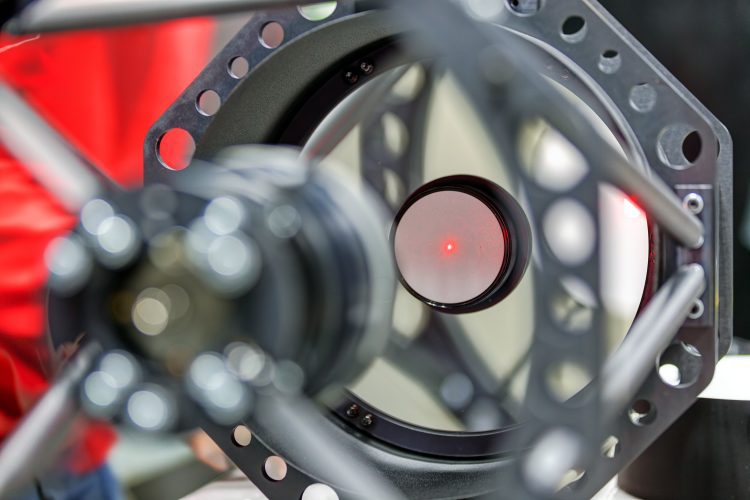

The reflector telescope is unique among telescopes because of its reflective design. Instead of using lenses to refract or bend light to form images, it uses a combination of curved surfaces and flat mirrors to reflect light for imaging.
Athermal optical systems are engineered to maintain consistent performance across a wide range of temperatures without the need for active thermal compensation.
With rapid advances in electronics and wireless technology, electromagnetic interference (EMI) has become a major concern, often impacting the performance of sensitive equipment.
A space optical remote sensing payload is the core of a spacecraft, generating data via imaging sensors (e.g., multispectral, LiDAR) and transmitting it to Earth using advanced optics like lasers and adaptive systems.
Ultra lightweight space cameras fit maximum performance in a minimalist package. They’ve got to—- when you’re launching a spacecraft weight is at a premium, and every gram counts.
Silicon carbide optics, known for excellent thermal stability and complex shapes, also boast unique optical properties.
Explore SWIR hyperspectral camera lenses, blending short-wave infrared technology with hyperspectral imaging for detailed spectral analysis.
The Ritchey Chrétien telescope, a reflecting telescope in the Cassegrain system, reduces spherical aberration and coma for clearer viewing.
Aspheric lenses improve optical performance by reducing aberrations, delivering sharper images and better edge-to-edge clarity. They are thinner, lighter, and enable compact designs while maintaining high image quality.
The optimization of parabolic mirror telescopes ensures exceptional image quality for astronomical observation.