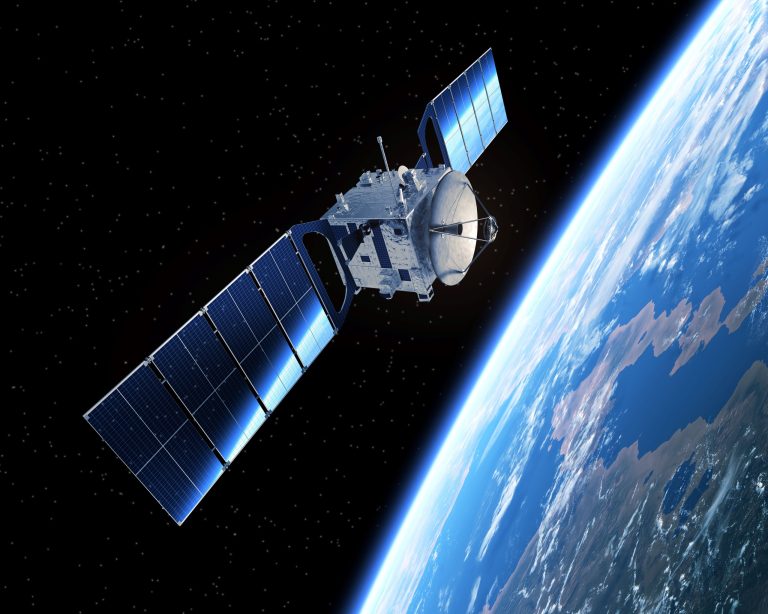
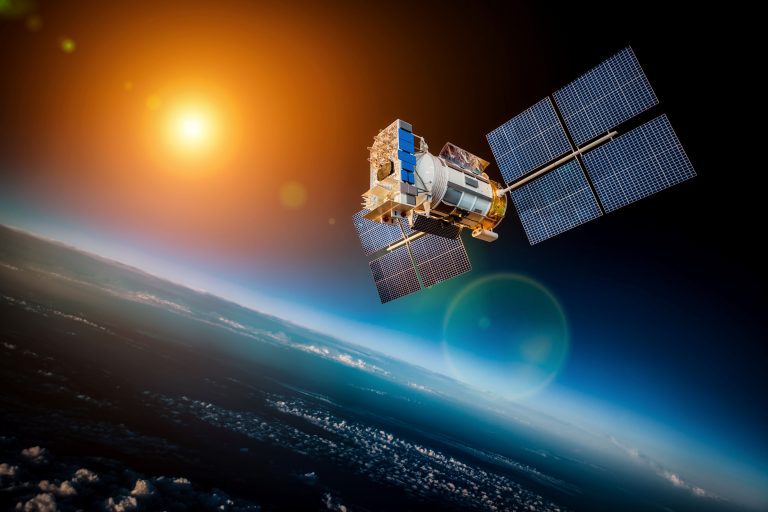
A Space Optical Remote Sensing Payload is the part of a spacecraft designed to generate valuable data and transmit it back to Earth.
This includes various imaging devices like panchromatic and multispectral sensors, LIDAR, and active optical sensors.
These optical payloads also use advanced optics, such as adaptive optical instruments and laser communication systems, for faster and more reliable data transfer.
At Avantier, we specialize in developing advanced optical components and systems to enhance the performance of these optical payloads.
The success of modern space missions relies directly on the precision of the space optical remote sensing payload. Whether deploying smallsat constellations for real-time Earth observation or charting deep-space exploration vectors, the optical payload dictates your mission’s data cap and structural payload limits.
At Avantier, we engineer custom, high-performance optics designed to withstand the violent structural vibration of launch and the extreme thermal cycling of orbit. We bridge the gap between initial optical system design and aerospace-grade component manufacturing.
A space optical remote sensing payload contains the core functionality of a satellite or other spacecraft.
What is a Space Optical Remote Sensing Payload?
A space optical remote sensing payload is the integrated collection of instruments, structural housings, detectors, and beam-delivery optics designed to collect electromagnetic radiation and convert it into high-value actionable data.
In practice, a modern space optical payload serves two core operational mandates:
Data Generation: Houses complex optical configurations ranging from wide-field panchromatic and multispectral sensors to advanced hyperspectral imaging spectrometers and active LIDAR systems.
High-Speed Downlinks: Uses optical communication payloads (laser communication) to transfer data back to Earth stations at gigabit speeds, entirely bypassing traditional radio frequency (RF) bandwidth bottlenecks.
To overcome atmospheric turbulence during downlinks, our systems integrate adaptive optical instruments that measure wavefront errors in real time, dynamically adjusting to correct signal distortion.
Space optical remote sensing payload in action: a laser is used to beam data to earth from spacecraft like the ISS.
Advanced Optical Element Development
To achieve structural miniaturization without sacrificing aperture clarity, our engineering teams focus on pioneering micro-optics and non-spherical geometries. Our custom fabrication capabilities include:
Freeform Optics: We design and manufacture complex, non-rotationally symmetric surfaces. This allows for fewer total elements in the optical train, radically reducing weight while correcting high-order aberrations in compact CubeSat layouts.
Microlens Arrays: Custom-engineered micro-optics built for maximized light-collection efficiency, acting as precision fill-factor enhancers for next-generation focal plane arrays.
Integrated Microfluidics: Ongoing research into on-chip spectral analysis channels, utilizing microfluidic structures to safely manipulate light-matter interactions directly on the detector substrate.
Space optical remote sensing payloads are built for ultra high performance in extreme environments.
Advanced Optical System Design and Manufacturing
Space optical payloads require more than just routine, run-of the mill optical systems. We specialize in advanced optical system design, and that includes designing and manufacturing what are called active optical systems.
Advanced Optical Design:Active optical alignment and correction mechanisms can be implemented to maintain precise optical performance in orbit. We are also skilled at developing adaptive optics systems to compensate for atmospheric turbulence and improve image quality.
Hyperspectral Imaging: Hyperspectral imaging is a quickly growing field, and advances contribute to the miniaturization and spectral resolution improvement of hyperspectral sensors for broader applications. Our teams can help you explore on-board data processing techniques for real-time analysis of hyperspectral satellite data.
Standardization and Commercialization: Customization is important, but it’s just as important to be able to participate in standardization of optical components. Interfaces for space-borne applications, for instance, is one area where you need various components to fit just right. At Avantier, we know all the standards like the back of our hand. Our teams can develop modular and scalable optical systems to cater to the growing demand for various space missions.
Why Choose Avantier for Space Optical Payloads?
Navigating the trade-offs between component cost, weight, lead times, and structural survival is one of the toughest parts of space mission planning. Avantier delivers aerospace-grade custom design, testing, and optical assembly fabrication at commercial scalability. We ensure your payload meets every line of your performance budget without commercial-off-the-shelf compromises.