

Key Takeaways:
- Conventional microscope objectives are often not designed for the optical, mechanical, and material constraints imposed by quantum experiments.
- Challenges including long working distance requirements, multi-axis beam access, multi-wavelength correction, and magnetic compatibility can turn standard optics into system-level bottlenecks.
- As neutral atom and ultracold atom architectures scale, objective lens limitations increasingly affect not only imaging performance, but the scalability and operating limits of the quantum system itself.
Optical Constraints Become Architecture Constraints in Quantum Systems
Microscope objectives used in quantum experiments are often treated as standard optical components selected primarily by numerical aperture, magnification, and working distance. In practice, that assumption increasingly breaks down.
In neutral atom platforms, quantum gas microscopy, and ultracold atom experiments, objective lenses do not operate under the assumptions for which conventional microscopy optics were designed. They function inside tightly constrained system architectures shaped by vacuum interfaces, intersecting laser geometries, wavelength-specific requirements, and environmental sensitivities that extend well beyond conventional imaging conditions.
Under these conditions, the limitations of standard objectives are not incremental performance issues. They often emerge as architecture-level constraints.
As quantum systems scale in complexity, this distinction becomes increasingly difficult to ignore.
Conventional Objectives Are Optimized for the Wrong Operating Environment
Commercial objectives are typically designed for microscopy environments where optical access is largely unobstructed, mechanical packaging is secondary, and imaging performance can be optimized around relatively standardized conditions.
Quantum systems rarely satisfy those assumptions.
Imaging frequently occurs through vacuum chamber windows. Beam paths may intersect at multiple angles around the objective. Mechanical clearances can be severely constrained. Materials that would be irrelevant in conventional microscopy may introduce unacceptable magnetic perturbations.
These are not edge cases.
They are often defining conditions of the system.
Yet conventional objectives are rarely designed around them.
Requirement |
Conventional Objectives |
Quantum Requirements |
Working Distance |
Limited |
≥12 mm + vacuum window |
Beam Access |
Not optimized |
Multi-axis access required |
Wavelength Correction |
Broadband |
Discrete quantum wavelengths |
Magnetic Compatibility |
Typically not specified |
Critical |
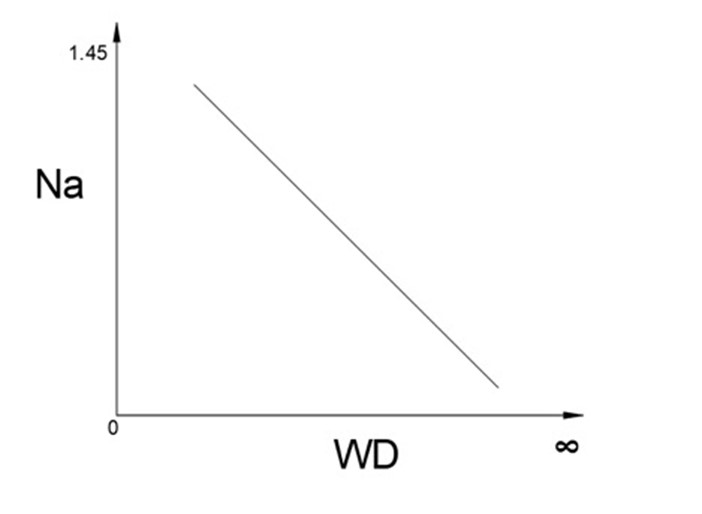
The High-NA and Working Distance Tradeoff Becomes Severe in Quantum Architectures
The tension between numerical aperture and working distance is a familiar problem in optical design. In quantum experiments, however, this tradeoff becomes considerably more restrictive.
Longer working distances are often imposed by vacuum chamber geometry, optical access requirements, or the need to image through window materials while maintaining clearance from the atom plane.
At the same time, high numerical aperture may be required for fluorescence collection, single-site resolution, or state detection performance.
These requirements push directly against each other.
What appears manageable in conventional microscopy often becomes a limiting factor when both constraints must be satisfied simultaneously under quantum system conditions.
In many cases, standard objective architectures simply were not designed for this regime.
Mechanical Geometry Can Become a Hidden Failure Mode
In conventional microscopy, objective geometry is often treated as packaging.
In quantum systems, it can become a source of optical failure.
Objective housings, front-end dimensions, and lens tip geometries may obstruct critical beam paths required for trapping, cooling, Raman transitions, or excitation pathways. In tightly integrated systems, even small mechanical intrusions can force compromises in beam routing, chamber design, or control architecture.
This is not typically captured in conventional objective specifications. Yet in many quantum experiments, it determines whether the optic can be integrated at all. Mechanical geometry is often treated as secondary. In practice, it may be fundamental.
Conventional Broadband Correction Often Fails in Multi-Wavelength Quantum Systems
Most commercial objectives are not optimized for the wavelength combinations common in quantum hardware.
That becomes problematic when a single optical system must support multiple highly specific operating wavelengths associated with trapping, cooling, imaging, and coherent control.
This is not simply a question of broadband transmission. It is a question of whether aberration correction remains acceptable at precisely the wavelengths the experiment depends upon. In many cases, it does not. And performance degradation may appear not as obvious image failure, but as reduced collection efficiency, compromised addressing precision, or instability in system performance.
Those effects are often more difficult to diagnose—and potentially more damaging.
Material Assumptions That Work in Conventional Optics May Become Unacceptable
Quantum systems impose constraints that conventional optical design often does not prioritize. Magnetic compatibility is a notable example.
Materials, fasteners, or assembly choices that are benign in standard microscopy environments may introduce perturbations unacceptable in sensitive quantum experiments. The consequences may appear in trap instability, frequency shifts, or degraded coherence performance.
These issues are often invisible at the component level. They emerge only at the system level. Which is precisely why they can be difficult to anticipate when selecting conventional optics.
Optics Can Become a Scalability Bottleneck
These challenges are often initially treated as isolated integration problems.
They rarely remain isolated. As systems scale toward larger atom arrays, denser beam geometries, or more complex control architectures, limitations in optical access, objective geometry, aberration performance, or material compatibility can propagate into broader system constraints.
What begins as an optics problem can become a scalability problem. And eventually, an architecture problem. At that point, the objective lens is no longer simply part of the imaging stack. It is influencing the operating limits of the quantum system itself.
The Assumption of Standard Optics Is Increasingly Under Pressure
Conventional microscope objectives remain powerful tools.
But their underlying assumptions were not built around the demands of modern quantum hardware.
And increasingly, that mismatch is becoming difficult to ignore.
As neutral atom systems and quantum imaging architectures advance, the question is no longer simply whether standard objectives can be adapted to fit these environments.
The more relevant question may be whether they were ever the right starting point to begin with.
Advanced optical approaches are beginning to address these constraints, particularly through innovations in long working distance objectives for quantum imaging.
Conclusion
In advanced quantum experiments, objective lenses operate under constraints fundamentally different from those of conventional microscopy.
Long working distance requirements, high numerical aperture demands, multi-axis beam access, wavelength-specific correction, and material compatibility challenges do not merely complicate objective selection.
They challenge the assumptions behind conventional objective design itself.
And increasingly, that challenge is shaping the limits of quantum system performance.
Related Content



GREAT ARTICLE!
Share this article to gain insights from your connections!