
Key Takeaways: Athermal Optical Systems
- Precision in aerospace requires Passive Athermalization to meet SWaP-C goals, replacing heavy motors with material synergy.
- By pairing substrates with complementary dn/dT values and negative CTE housings, engineers cancel focal shifts. High-performance materials like Germanium and Silicon Carbide are essential for thermal stability.
- Avantier bridges theory and reality through diamond turning and TVAC testing, ensuring mission-critical MTF stability across extreme gradients from -40°C to +100°C.
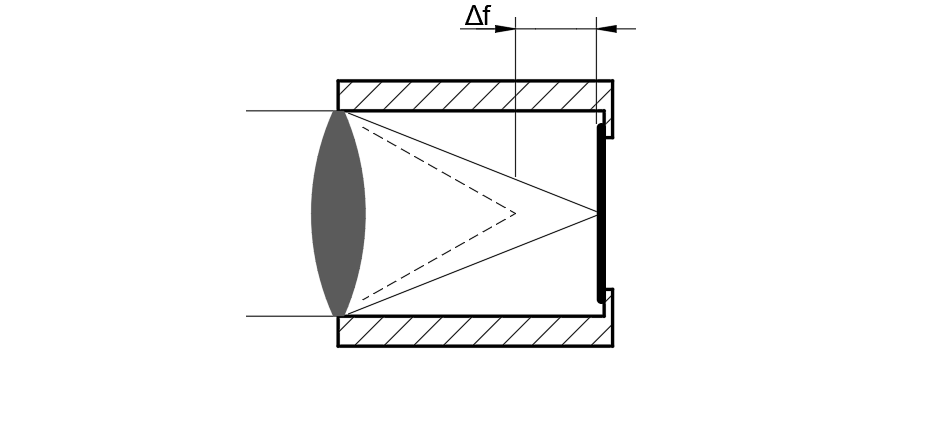
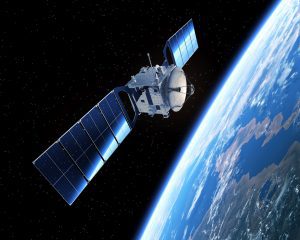
In the vacuum of Low Earth Orbit (LEO) or the friction-heated environment of a tactical missile, optical performance is never a static value. For aerospace and defense engineers, temperature is a “moving target.” A swing from -40°C to +100°C doesn’t just expand the housing; it shifts shifts the refractive index (dn/dT) and destroys the focal plane.
At Avantier, athermalization is more than a technical requirement—it is a strategic negotiation with physics to ensure mission success where failure is not an option.
1. The Strategy of Passive Athermalization: “The Efficiency of Subtraction”
Active focus compensation (motorized systems) introduces unnecessary weight, power draw, and mechanical points of failure, power consumption, and mechanical failure risks. For satellite payloads and high-speed interceptors, we advocate for Passive Athermalization. By eliminating active components, we improve reliability and meet stringent SWaP-C (Size, Weight, Power, Cost, and Cooling) constraints. Our design framework balances three core principles:- Optical Neutralization: Pairing materials with complementary Thermal ν-numbers. By matching a high dn/dT material (e.g., Germanium) with a negative dn/dT material (e.g., specific Chalcogenides or Sulfides), we effectively cancel out any internal focal shifts.
- Structural Compensation: Utilizing advanced housing materials like ALLVAR Alloy 30 (Negative CTE) to physically offset the expansion of the optical train.
- Wavefront Aberration Theory: Moving beyond simple focus to optimize for wavefront stability, ensuring high MTF (Modulation Transfer Function) across the entire thermal envelope.
2. Navigating Material Thresholds: Ge, ZnS, and SiC
Every substrate has a physical threshold. Our expertise lies in identifying the optimal material for your specific thermal gradient.
Material | Key Advantage | Strategic Application |
Germanium (Ge) | High refractive index for compact designs. | High-resolution tactical IR sensors (requires monitoring for Thermal Runaway). |
Sulfide (ZnS/Chalcogenide) | Versatile IR transmission and athermal properties. | Lightweight passive doublets for UAV and CubeSat payloads. |
Silicon Carbide (SiC) | Extreme stiffness and thermal conductivity (120+ W/m·K). | Large-aperture space mirrors where structural symmetry is vital. |
Ultra-Low Expansion (ULE/Invar) | Near-zero CTE for structural frames. | Precision mounts designed to prevent mechanical misalignment in orbit. |
3. Custom Manufacturing: Where Design Meets Reality
Off-the-shelf (COTS) components rarely survive the rigors of launch or the thermal shocks of deep space. At Avantier, we bridge the gap between complex mathematical modeling and physical reality through specialized custom processing:- Precision Diamond Turning: We machine brittle IR materials like Zinc Sulfide and Germanium to sub-micron tolerances, minimizing subsurface damage.
- Thermal Vacuum (TVAC) Readiness: Our assemblies are engineered for the vacuum of space, utilizing Multi-Layer Insulation (MLI) and radiative surface coatings to manage heat flux.
- Advanced Index Matching: We synchronize the refractive index changes with housing expansion for seamless performance in rapid-transition thermal environments.
- Rigorous Metrology: Every custom system undergoes thermal cycling tests from -40°C to +85°C to verify that the design rationale holds true in real-world conditions.
4. Why Partner with Avantier?
A project is not “complete” when a lens is delivered; it is complete when your system delivers a clear, stable image regardless of the environment. We don’t just sell optics—we provide the Rationale and the Custom Machining needed to turn physical constraints into mission-critical assets.
Whether you are developing a LEO satellite constellation, hypersonic seeker, or long-range thermal surveillance, our engineering team is ready to stabilize your “moving target.”
Ready to define the Rationale for your next mission?
[Contact our Engineering Team for a Custom Consultation]Related Content


GREAT ARTICLE!
Share this article to gain insights from your connections!