

Key Takeaways
- Avantier’s fixed focal length lenses deliver superior stability, high resolution, and dependable performance for helicopter aerial photography.
- Our optimized optical design minimizes vibration effects, ensuring sharp, distortion-controlled imaging for applications such as mapping and inspection.
- Lightweight construction enhances aircraft balance and gimbal integration, while wide temperature and shock tolerance ensure durability in demanding conditions.
- With customizable specifications, these lenses provide consistent, mission-critical imaging across diverse aviation platforms.
A Fixed Focal Length Lens Solution for Helicopter Aerial Photography Lens
When aircraft such as helicopters or drones operate in turbulent, vibration-rich environments, capturing sharp, stable, high-resolution images becomes a true test of optical engineering. Whether battling rotor-induced vibration in a helicopter or rapid maneuvering in a drone, imaging systems must withstand forces that easily degrade picture quality. In these demanding conditions, fixed focal length lenses stand out as a simple yet highly effective solution. Engineered for precision and resilience, they deliver exceptional clarity and stability across a wide range of aerial platforms, from crewed helicopters to compact UAVs.
This article explores why fixed focal length lenses—particularly Avantier’s specialized helicopter solutions—are essential for achieving reliable, high-resolution aerial imaging.
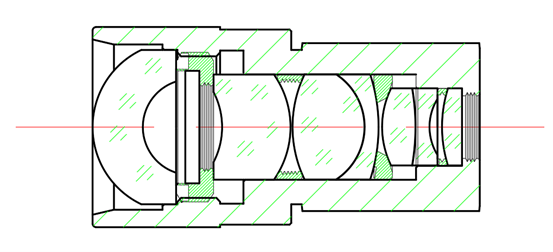
Product Specifications
Diameter | 14.27 mm |
Length | 27.58 mm |
Focal Length | 5.51 mm |
Imaging Performance | MTF at 50 lp/mm:• On-axis > 0.6• Off-axis (±13.6°) > 0.45 |
Housing Material | Kovar alloy |
Coating | High-Efficiency Anti-Reflection (HEAR) coating optimized for the 530–570 nm and 800–1600 nm spectral bands.Average reflectance < 1%, peak reflectance < 1.5%, with an incidence angle range of 0° to 40°. |
I. The Challenge Above the Ground: Why Helicopter Aerial Photography Is So Demanding
Unlike ground-based imaging, aerial photography from helicopters pushes optical equipment to its limits. Key challenges include:1. Intense Vibration and Shock
Rotor-induced vibrations and air turbulence span multiple frequencies, causing:- Image blur
- Reduced sharpness
- Overall degradation of image quality
2. Space and Weight Restrictions
Helicopter cabins are compact, and every gram matters. Imaging equipment must be:- Small
- Lightweight
- Easy to integrate with gimbals and stabilizers
3. Extreme Environmental Changes
During flight, lenses face:- Rapid temperature fluctuations
- Pressure changes
- Exposure to harsh environmental conditions

II. Technical Advantages: How a Fixed Focal Length Lens Excels in the Air
1. Superior Optical Performance for Maximum Image Quality
Prime lenses use streamlined optical structures. Without the compromises required in zoom mechanisms, engineers can fully optimize lens groups to reduce:- Aberrations
- Distortions
- Flare and ghosting
- Bright, clean images even in low light (dawn, dusk, overcast conditions)
- Lower noise without raising ISO
- Beautiful bokeh and accurate subject isolation for cinematic aerial visuals
2. Exceptional Environmental Adaptability
Reliability is crucial in aviation. Fixed focal length lenses offer:- High structural integrity due to fewer moving parts
- Vibration-resistant optical performance, crucial for helicopter mounting points
- Wide operating temperature range (–30°C to +60°C) enabled by specialized non-thermal treatments
3. Compact, Lightweight Design for Aviation Applications
“Small lens, big capability” describes the engineering philosophy. Benefits include:- Reduced load on the aircraft, improving balance and endurance
- Compact size, allowing installation in tight spaces
- Optimized integration with gimbals and stabilization platforms
- Up to 40% lighter than comparable aviation zoom lenses
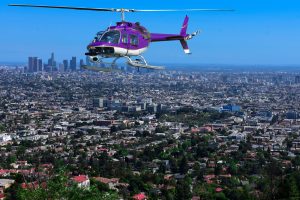
III. Professional Value: From Simply Capturing Images to Capturing Precision
1. Precision That Drives High-Value Applications
In fields such as:- Surveying
- Mapping
- Photogrammetry
- Industrial inspection
- Higher resolution
- Lower distortion
- More reliable data acquisition
2. Enhanced Creative Expression
A large aperture gives aerial photographers the flexibility to move beyond documentation and toward storytelling. Prime lenses enable:- Strong subject emphasis
- Cinematic depth of field
- Improved visual aesthetics of landscapes and landmarks
3. Full-Scenario Aerial Coverage
Combining multiple focal lengths—such as 8mm, 16mm, 25mm, and 35mm—creates a versatile aerial imaging toolkit:- Wide-angle lenses capture expansive landscapes
- Medium and telephoto lenses deliver detailed close-ups and distant subjects
4. Cutting-Edge Trends: Miniaturization Meets High Resolution
Fixed focal length lens technology continues advancing, with innovations including:- High-pixel-density support (e.g., 24.4MP imaging on 2.74 μm sensors)
- Custom optical designs for low-altitude or long-range scenarios
- Deep system integration, combining lenses with sensors and stabilizers for turnkey solutions
IV. From Mapping to Film Production: Versatility Across Aerial Applications
Fixed focal length lenses are essential in a wide range of helicopter-based and aerial imaging scenarios, including:- Professional mapping and surveying
- Film and television cinematography
- Emergency response and search-and-rescue
- Environmental and wildlife monitoring
- Infrastructure inspection
Related Content


GREAT ARTICLE!
Share this article to gain insights from your connections!