
Overcoming Optical Bottlenecks in Quantum Computing
Overcoming Optical Bottlenecks in Quantum Computing header

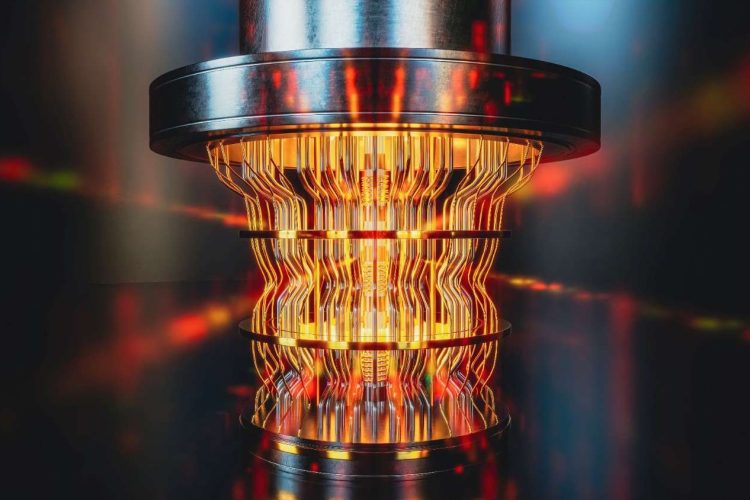
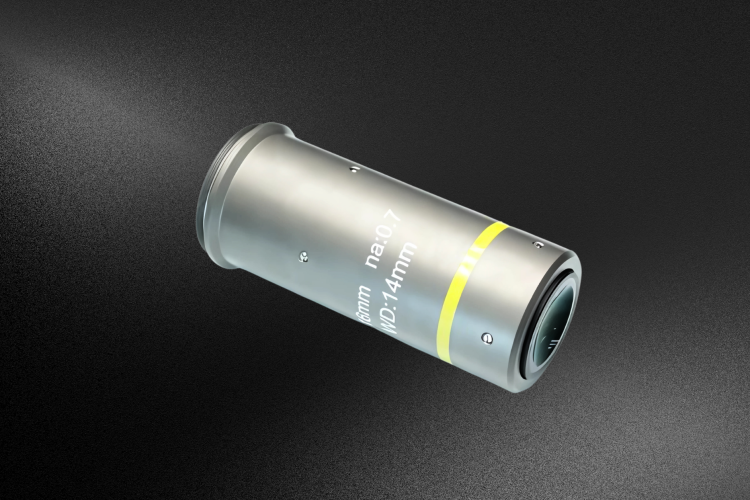
Precision Performance: Achieves diffraction-limited imaging using High-NA Cryogenic Quantum Optics to maximize photon collection efficiency.

Environmental Stability: FEA-optimized housings ensure sub-nanometer wavefront stability from room temperature down to 4K.

Broadband Correction: Tailored multi-wavelength optimization (UV-NIR) supports simultaneous cooling, trapping, and state readout.

Scalable Integration: Engineered for seamless implementation in trapped-ion, neutral atom, and solid-state quantum platforms.
Read more
Lessons Learned in Scaling Silicon Photonics

Key Takeaways Silicon photonics has evolved from telecom roots to powering data centers, AI hardware, and emerging quantum systems. Its success comes from combining high bandwidth, energy efficiency, and CMOS scalability.  Across industries, one lesson repeats: performance alone isn’t enough—scaling requires manufacturable processes, strong packaging, and tight co-design with electronics.  As quantum computing pushes demands […]

Read more
Optical Requirements for Quantum Computing: Why High-NA and Long WD Matter

Introduction: When Quantum Computing Meets Optical Precision In 2023, Google’s Quantum AI team demonstrated a major leap in quantum computing. Their Sycamore processor completed a complex task in just 200 seconds—a calculation that would take classical supercomputers roughly 10,000 years. While most attention focused on the qubits themselves, another key technology made this precision possible: […]

Read more
What Are Optical Waveguides?

Key Takeaways Optical waveguides guide light using refractive index contrast, essential for quantum photonic circuits. Strip, rib, and slot geometries offer trade-offs in confinement and loss. Key design priorities include minimizing propagation and coupling losses, maintaining phase stability, and enabling dense, scalable integration. Materials like silicon, SiN, LiNbO₃, and AlN support varied quantum functions. Applications […]

Read more
Silicon Photonics 101

Key Takeaways Silicon photonics leverages light to transmit quantum information with low loss, minimal noise, and high scalability.  It enables dense, room-temperature quantum interconnects, integrates with classical CMOS logic, and supports photonic quantum computing architectures.  Compared to traditional electronics, photonics offers greater bandwidth, lower energy consumption, and better signal fidelity.  While challenges like scalable photon […]

Read more
Best Optics for Quantum Entanglement Experiments

Quantum entanglement experiments hinge on two things: the optics chain, which sets the quality of the entangled state, and the single-photon detectors, which define how reliably you can measure it. This article highlights best-practice setups, proven optical stacks, and how to select detectors for different scenarios. Why optics and detectors matter Bell-state fidelity: high indistinguishability […]

Read more
Long WD UV Objective for Scalable Ion-Trap Quantum Computing

Key Takeaways Long working distance microscope objectives are essential for ion-trap quantum computing, enabling precise UV laser excitation and high-resolution fluorescence imaging.  Their extended working distance, wide FOV, and low distortion make them ideal for multi-ion qubit control.  Avantier’s custom UV objective lens met stringent requirements for 1 µm spot projection, >80% transmission, and diffraction-limited […]

Read more
NA 0.48 UV Objective with 52mm Working Distance for Ion Trapping
NA 0.48 UV Objective with 52mm Working Distance for Ion Trapping 2

Key Takeaways In ion trapping experiments, precision optics are critical for delivering UV laser excitation and collecting ion fluorescence efficiently. This application note details the design, manufacturing process, and practical performance of a custom microscope objective for ion trapping with a long working distance (≥52 mm) and high numerical aperture (NA ≥ 0.48). The system […]

Read more
High NA, Vacuum-Compatible Objective Lenses for Quantum Computing

Key Takeaways Objective lenses are essential in quantum computing for precise beam focusing, efficient fluorescence collection, and high-resolution qubit imaging. High numerical aperture boosts addressability and readout fidelity, while optimized working distance enables operation through vacuum or cryogenic interfaces. Wavelength-specific coatings, aberration correction, and window compensation preserve signal integrity. Vacuum and cryogenic compatibility, along with […]

Read more