
Supporting future mission like LUVIOR and HabEx, Avantier’s successful development of the Φ1.1 m RB-SiC mirror will foster new discoveries, offering clearer views of our universe with unprecedented efficiency and precision.
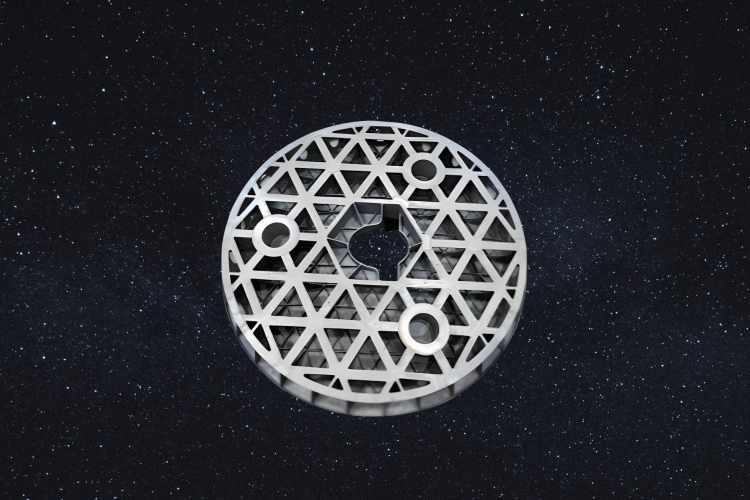

The SiC mirrors tag focuses on silicon carbide mirror technology used in applications where low mass, high stiffness, and excellent thermal stability are critical. Articles here may reference case studies of large-aperture SiC mirrors engineered to achieve very low surface density while maintaining stringent surface accuracy and stability, particularly for space and aerospace missions. Topics include lightweighting strategies, reaction-bonded SiC processing, and coating approaches that preserve optical performance under extreme temperature swings. Readers learn how SiC mirrors compare with alternatives like beryllium in terms of manufacturability, cost, and thermal behavior. For system designers planning space telescopes, Earth observation payloads, or high-performance ground-based instruments, this tag illustrates how SiC mirror technology can improve payload efficiency and image quality. It underscores Avantier’s experience in developing and producing custom SiC mirrors for demanding optical systems.
Supporting future mission like LUVIOR and HabEx, Avantier’s successful development of the Φ1.1 m RB-SiC mirror will foster new discoveries, offering clearer views of our universe with unprecedented efficiency and precision.

Key Takeaways Space-based telescopes are evolving rapidly, with growing demand for compact, high-performance optical systems. Freeform optics enable miniaturized designs, while SiC mirrors offer stability and low mass for harsh space environments. Lightweight structures are essential for both CubeSat payloads in LEO and large observatories in deep space. Across mission sizes, the trend is clear: […]

The Silicon Carbide Mirror was specifically designed to meet the stringent requirements of aerospace engineering, ensuring exceptional performance in challenging conditions.