
NIR Microscopy: Applications and Design Challenges in the 780–2500nm Range

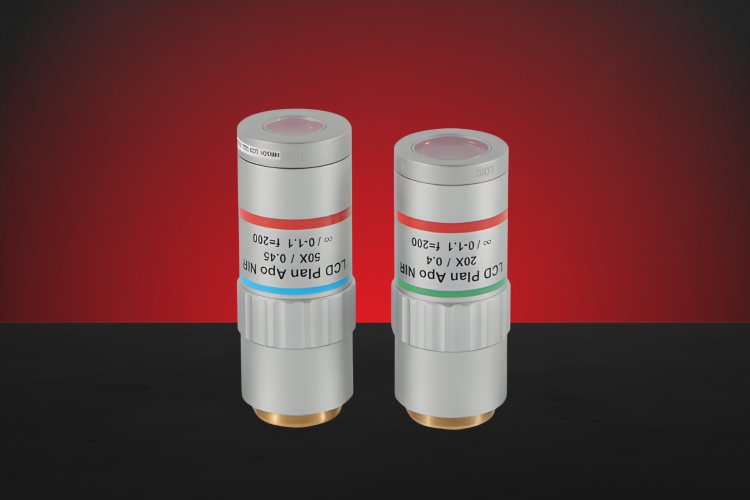
Near-infrared (NIR) microscopy objectives (780–2500nm) are essential for “seeing through” opaque barriers.
By balancing high resolution with superior penetration, they enable deep-tissue biological imaging, subsurface semiconductor defect detection, and non-destructive material analysis.
Despite design challenges like specialized material selection (ZnS/Germanium) and complex aberration correction, modern NIR optics provide high-transmittance solutions (≥ 85%) that surpass the physical limits of visible light, driving innovation in both high-tech manufacturing and life sciences.
Read more
Space Telescopes: Optical Design Principles

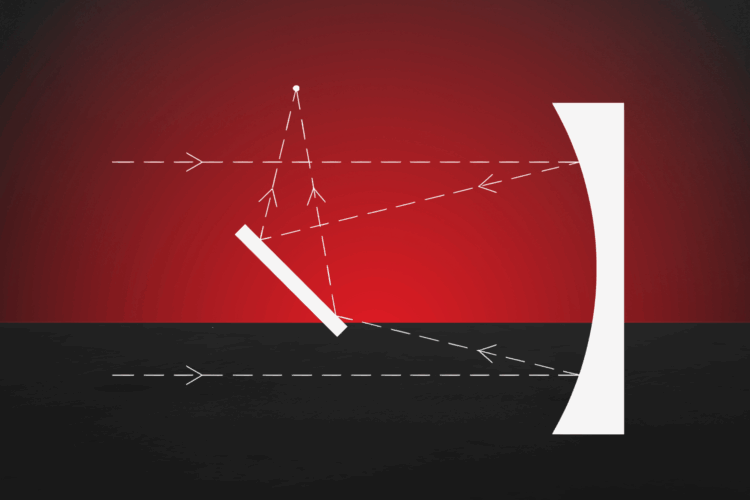
Space telescope design is governed by aperture size, aberration control, and environmental constraints unique to orbit.
Refracting systems offer stability but suffer severe aperture limits, while reflecting architectures dominate modern space observatories due to scalability and chromatic aberration elimination.
Catadioptric designs provide compact, balanced solutions for small to mid-sized missions.
As space optics evolve, segmented mirrors, active wavefront correction, and hybrid architectures are defining the next generation of high-performance space telescopes.

Read more