
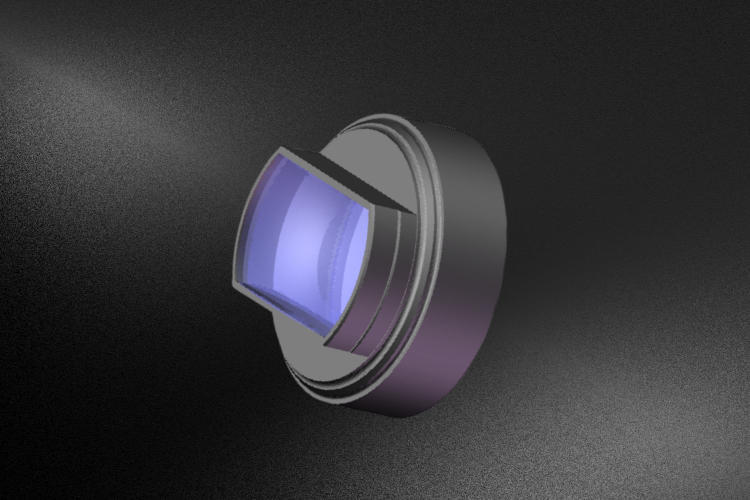
Precision Telecompressors redefine imaging efficiency, pairing full-frame optics with smaller sensors while preserving field of view, sharpening detail, and strengthening low-light performance across advanced applications.

Avantier Inc.
Precision Telecompressors redefine imaging efficiency, pairing full-frame optics with smaller sensors while preserving field of view, sharpening detail, and strengthening low-light performance across advanced applications.
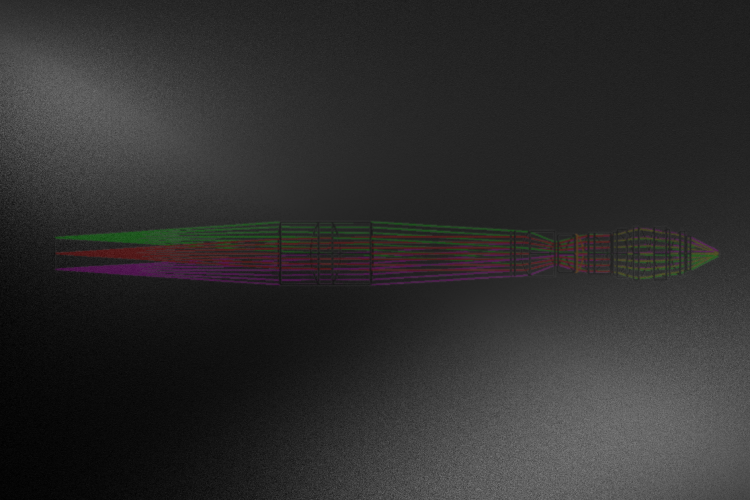
Key Takeaways The Infinite Conjugate Microscope Objective delivers superior optical flexibility, enabling modular imaging paths through its collimated beam design. High numerical aperture, advanced aberration correction, and optimized working distances provide exceptional resolution and measurement accuracy. Its robust optical and mechanical engineering supports multimodal imaging, UV–IR operation, and integration with laser systems. These capabilities make […]

This project required designing a lightweight NIR reflection mirror with a machined backside pocket structure; Avantier considered manufacturability, structural integrity, thermal behavior and operational reliability in providing a stable, production-ready solution.
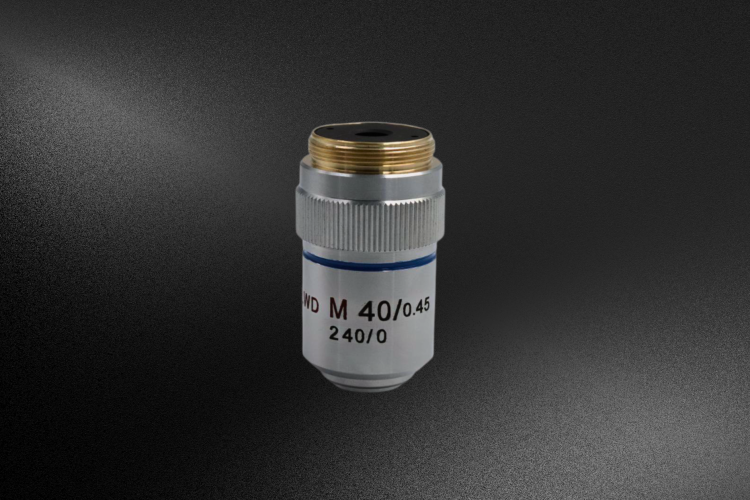
Finite conjugate microscope objectives remain an efficient solution to achieving high-resolution imaging in applications requiring compactness, stability, and cost-effective excellence, making them indispensable in industrial inspection, portable diagnostics, and micro-nano machining.

Automotive fixed-focal length lenses offer stable, cost-efficient, high-performance imaging, supporting all-weather perception, radar fusion, and accurate 3D environmental sensing in ADAS and autonomous driving systems

Avantier offers fully customized fixed focal length lens solutions; Explore how Avantier designed specialized helicopter solutions to help achieve consistent performance even under extreme vibration or rapid flight dynamics.

The Infinite Conjugate Microscope Objective—often referred to in industry as the infinity-corrected objective—has emerged as the cornerstone of advanced scientific instrumentation, precision inspection systems, and high-end manufacturing. It remains the optimal solution for unlocking new frontiers in microscopy and photonics.

Silicon photonics is the technology of photonic circuits on silicon substrates; The promise of high bandwidth, energy efficiency, and CMOS compatibility make silicon photonics central to next-generation computing.

Quantum computing is one of humanity’s most ambitious technological frontiers, depending not only on quantum logic, but also on the tools that let us see and control the quantum world. Optical technologies and instruments remain critical to transforming quantum theory into practical, scalable reality.

Optical waveguides guide light using refractive index contrast, essential for quantum photonics circuits; They are the foundation of integrated quantum photonics. Achieving ultra-low loss, phase stability, high integration density, and thermal robustness is critical for scalable quantum architectures.