Understanding SSI – Subaperture Stitching Interferometry

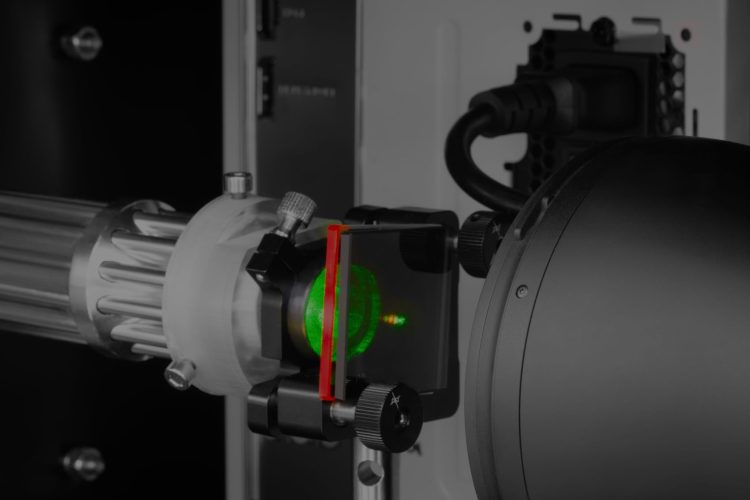
Introduction to SSI Subaperture Stitching Interferometry In the evolving landscape of optical systems manufacturing, test results with high measurement accuracy are critical—especially for large aperture and aspherical surface components used in technologies such as astronomical telescopes and EUV lithography. Conventional interferometers struggle to capture precise full aperture measurements due to limitations in range and aberration […]

Read more
How to Manage Wavefront Error Budgets in Space Telescopes
wavefront error budget, space telescope optics, surface figure accuracy, telescope alignment

Key Takeaways Meeting strict wavefront error (WFE) budgets is critical for space telescope optics, ensuring nanometer-level imaging accuracy and mission reliability. This article details practical strategies for managing WFE contributions from surface figure, alignment, coatings, and thermal effects. Advanced metrology techniques, such as phase-shifting interferometry and stitching profilometry, support precise wavefront measurement. By integrating custom […]

Read more
High-NA Long Working Distance Objective for Ion Trapping
High-na objective lens ion trap experiments

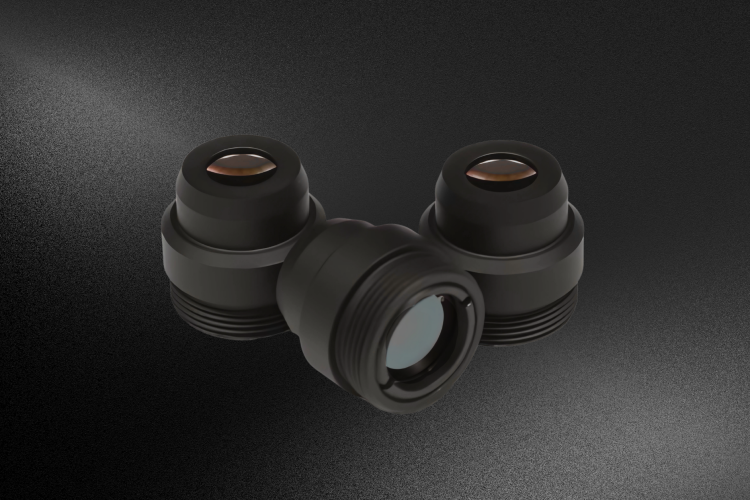
Key Takeaways In ion trapping experiments, precision optics are critical for delivering UV laser excitation and collecting ion fluorescence efficiently. This application note details the design, manufacturing process, and practical performance of a custom microscope objective for ion trapping with a long working distance (≥52 mm) and high numerical aperture (NA ≥ 0.48). The system […]

Read more
High-Fidelity Optical Sensors for ADCS in Small Satellites

Key Takeaways Optical sensors for ADCS—including star trackers, sun sensors, and Earth horizon sensors—provide the high-precision attitude knowledge required for CubeSats and small satellite platforms. Avantier delivers space-qualified optical components engineered for SWaP-constrained missions, offering compact, radiation-hardened systems that maintain performance under vibration, thermal cycling, and radiation exposure. Miniaturized, athermally stabilized optics and lightweight optical […]

Read more
Understanding Laser-Induced Damage Threshold (LIDT)

Key Takeaways: Laser-Induced Damage Threshold (LIDT) defines the laser energy or power at which materials sustain permanent damage.  It varies with laser type—pulsed or continuous—and is influenced by factors like pulse duration, wavelength, material defects, and thermal properties.  Pulsed lasers often cause non-thermal damage via ionization, while CW lasers primarily induce thermal effects. Testing methods […]

Read more
Case Study: Wide Field Space Imaging with Off-Axis Freeform Optical Design

Wide Field Space Imaging Project Overview Meeting the growing demand for large-area Earth observation requires optical systems that combine wide field of view, high optical performance, and compact design. One such solution is a space camera optical system based on an off-axis four-mirror freeform design, achieving a 70° ultra-wide field of view from a 640 […]

Read more
Selecting the Right Coatings for Space

Key Takeaways Satellite telescope coatings must support wide spectral ranges (UV to LWIR) while enduring radiation, AO exposure, and thermal cycles. AR coatings for lenses and windows require high transmittance, environmental resistance, and minimal outgassing. Gold and silver reflective coatings are essential for high-efficiency IR mirrors in thermal imaging telescopes. AO-resistant layers like ALD-deposited Al₂O₃ […]

Read more
High NA, Vacuum-Compatible Objective Lenses for Quantum Computing

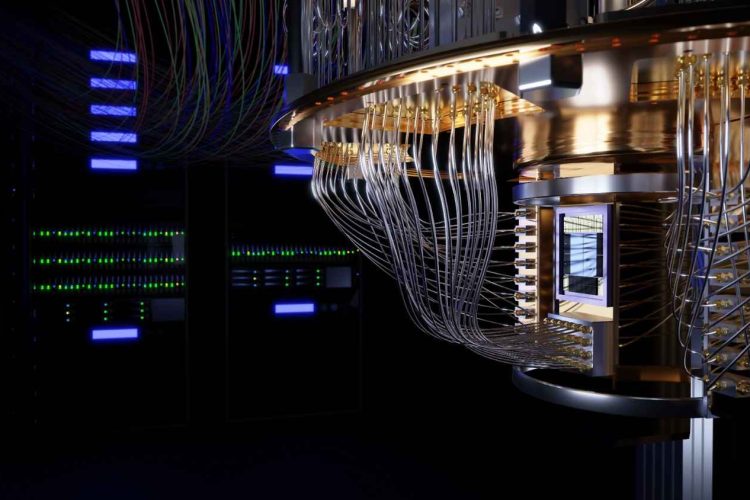
Key Takeaways Objective lenses are essential in quantum computing for precise beam focusing, efficient fluorescence collection, and high-resolution qubit imaging. High numerical aperture boosts addressability and readout fidelity, while optimized working distance enables operation through vacuum or cryogenic interfaces. Wavelength-specific coatings, aberration correction, and window compensation preserve signal integrity. Vacuum and cryogenic compatibility, along with […]

Read more
Case Study: Telescope Design Optimization for Performance and Manufacturability

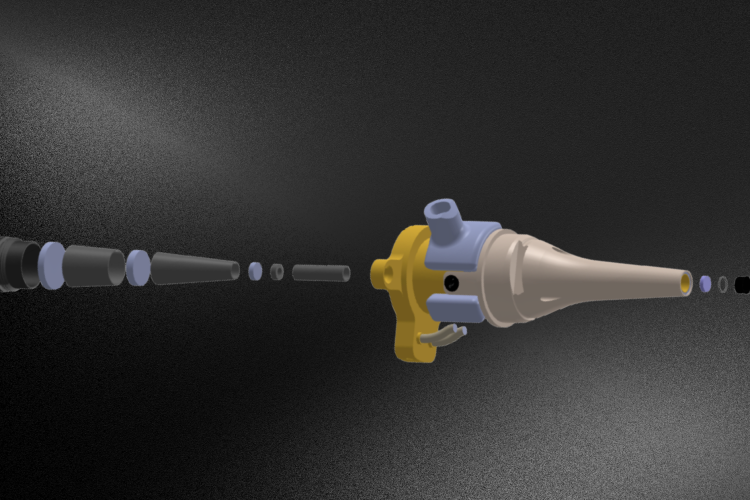
Key Takeaways Design optimizations enhanced telescope manufacturability and performance.  Replacing the optical tube with carbon fiber reduced weight and improved thermal stability.  A redesigned secondary mirror mount with locating pins and adhesive injection holes ensured precise, long-term alignment.  Adding shims and positioning pins between the primary mirror and tube enabled fine-tuned alignment and post-assembly stability.  […]

Read more
Precision Transmittance Testing for High-Performance Lenses

Key Takeaways: We offer precision lens transmittance testing using light intensity ratio and integrating sphere methods.  These techniques ensure high optical performance, verifying brightness, color accuracy, and system efficiency across application-specific wavelengths.  Our lab-built setups deliver reliable results for coated, curved, or multi-element lenses.  While we don’t use high-speed laser transmittance meters, our capabilities meet […]

Read more