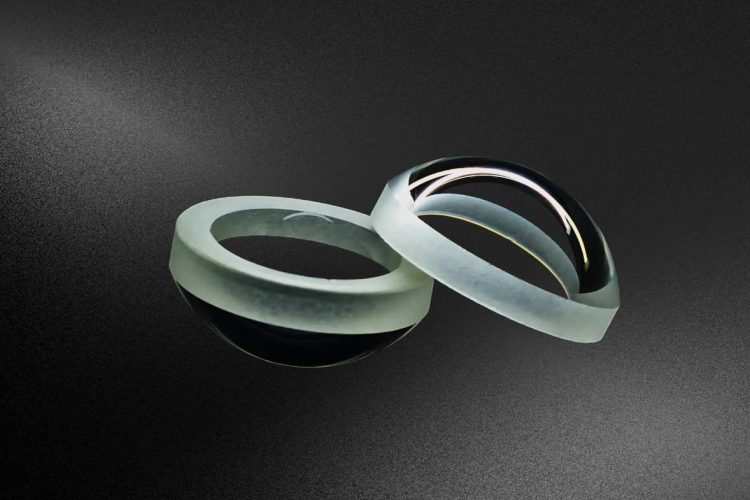
ISO 10110 is a global standard for representing optical components in technical drawings, ensuring clear communication between designers and manufacturers while defining specifications critical to precision lens design.
Optics in satellites and space instruments rely on passive thermal management to maintain performance. Engineers must ensure thermal stability using passive stabilization techniques and athermal optical design, responding to optical component behavior in orbit
When optical systems are critical to your project— especially in spaceborne, biomedical, precision and autonomous settings, performance margins are narrow and error tolerance is minimal. Small design oversights can cause issues and compromised performances, and it is recommended to consult an optical engineer.
By combining sophisticated algorithms, modular scanning, and intelligent calibration, Subaperture stitching interferometry (SSI) provides unmatched test results even on the most challenging optical systems. As it integrates AI and hybrid sensing methods, SSI will continue to lead the future of precision optical testing.
Wavefront error budgets define allowable optical distortions across telescope components, ensuring nanometer-level precision. Managing surface, alignment, coating, and thermal effects is critical for reliable, high-quality space imaging.
Custom high-NA objective lenses achieve ultra-precise UV excitation and imaging in ion trap experiments, boosting fluorescence capture and quantum accuracy.
By leveraging advanced materials, precision metrology, and ruggedization, engineers can enhance Attitude Determine and Control Systems (ADCS), essential for maintaining the precise orientation of small satellite platforms, including CubeSats and microsatellites.
Laser-Induced Damage Threshold (LIDT) defines the laser energy level that causes permanent optical damage. This guide explains mechanisms, testing methods, and key factors for safe, optimized laser system design.
Avantier’s precision-engineered SWIR hyperspectral lens delivers crisp imaging across 1000–2500 nm, combining high transmittance and thermal stability for reliable, high-resolution analysis.
Telescopes are exposed to radiation, atomic oxygen, extreme thermal cycles, and broad spectral demands- requiring coatings that ensure long-term performance, stability and survivability.