Home » Solutions » Space Optical Payload Engineering
Space Optical Payloads for Small Satellites and Space Missions
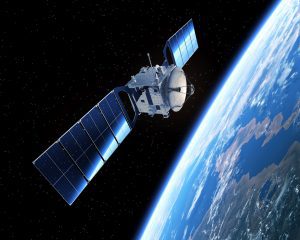
Avantier supports the development of compact optical payloads for small satellites and space missions.
Spaceborne optical systems must meet demanding requirements for imaging performance, size, weight, thermal stability, structural integrity, and manufacturability. We help satellite manufacturers and system integrators turn mission requirements into practical optical payload solutions that can be built, tested, and deployed.
Space optical payload development requires a balance between optical performance and practical engineering constraints.
Key design considerations include:
Imaging performance within limited payload volume
Mass and stiffness optimization for small satellite platforms
Focus stability across operational temperature ranges
Optical alignment under launch vibration and mechanical loads
Material selection for thermal and structural stability
Manufacturability, assembly, alignment, and test feasibility
Rather than optimizing each discipline independently, optical, mechanical, thermal, and manufacturing factors are evaluated together to improve overall payload feasibility.
Mechanical design plays a critical role in maintaining optical performance from launch through on-orbit operation.
Typical engineering activities include:
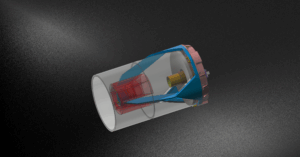
Lightweight payload structure design
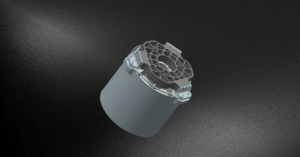
Optical bench and telescope structure design
Mirror, lens, and detector mount design
Structural stiffness optimization
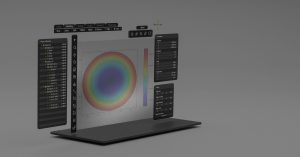
Finite element analysis
Vibration and shock assessment
Manufacturing-ready mechanical design
Material and structural approaches may include aluminum, titanium, Invar, CFRP, or SiC-based configurations depending on mass, stiffness, thermal stability, and manufacturing requirements.
A space optical payload must be designed not only for nominal performance, but also for realistic fabrication, assembly, alignment, and test conditions.
Typical activities include:
Optical tolerance analysis
Mechanical tolerance budgeting
Alignment strategy development
Assembly sequence planning
Manufacturing drawing support
Prototype and engineering model support
Design-for-manufacturing review
This helps assess whether the design can be manufactured and aligned while maintaining required optical performance.
Typical Design Parameters
Parameter
Typical Range
Aperture Range
Ø100 mm – Ø500 mm
Focal Length Range
760 mm – 8840 mm
Spectral Coverage
400 nm – 12000 nm
Payload Mass
0.7 kg ~ 15+ kg
Supported Satellite Classes
1U–6U CubeSat
Operating Temperature
-50 °C – +60 °C
Optical Architecture
RC, Cassegrain, Refractive, Off-axis reflective, SiC-based systems
Our optical payload engineering support is suitable for:
Earth observation missions
Space situational awareness
Scientific and exploration missions
Technology demonstration missions
CubeSat, microsatellite, and small satellite platforms
Why Customers Work With Us
Our strength lies in transforming demanding mission requirements into manufacturable optical payload solutions.
Rather than treating optical, thermal, and mechanical disciplines independently, we integrate them throughout the development process to achieve:
Compact and lightweight architectures
Stable imaging performance
Reduced development risk
Improved manufacturability
Efficient transition from design to hardware
From early concept studies through manufacturing support, we help customers develop optical payloads that meet challenging mission requirements while remaining practical to build, integrate, and deploy.
We can support feasibility studies, concept design, optical and mechanical engineering, thermo-optical evaluation, prototype development, and preparation for manufacturing.