Maximizing Cylindrical Lens Performance: A Guide to Precision Alignment and Design
Cylindrical Lenses for High-Performance Optical Engineering
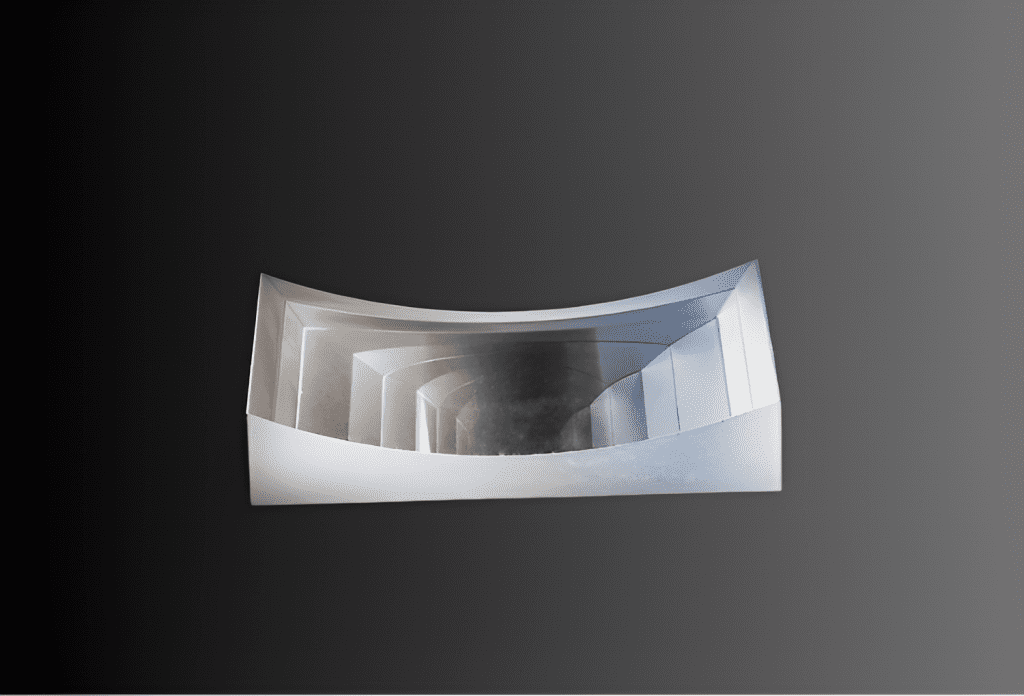
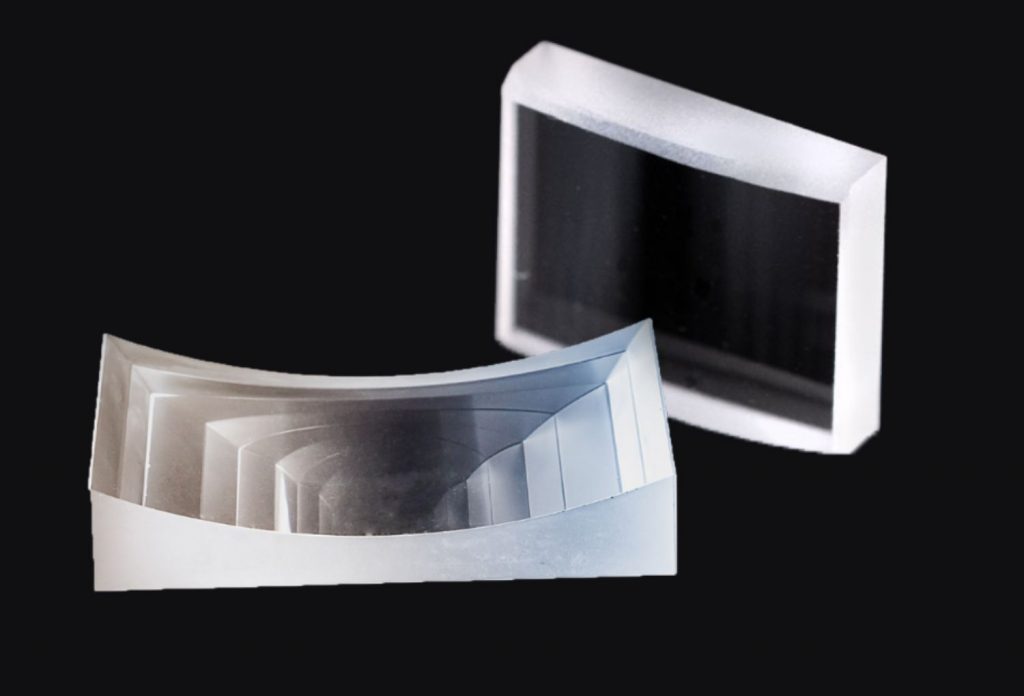
In high-performance optical engineering, cylindrical lenses are indispensable for breaking rotational symmetry and manipulating light in a single dimension.
However, moving from a first-order design to a diffraction-limited system requires more than just selecting a focal length.
For engineers working in laser beam shaping, spectroscopy, or aerospace metrology, the challenge lies in managing rotational sensitivity, tolerance stack-up, and the nuances of non-symmetric metrology.
This guide explores the critical engineering trade-offs required to integrate cylindrical optics effectively and highlights the transition from theoretical design to as-built reality.
Critical Applications: When to Choose Cylindrical Optics for Precision Systems
Cylindrical lenses are introduced when optical power must differ across orthogonal axes—a requirement common in systems where the source itself is inherently asymmetric.
High-Power Laser Diode Conditioning: Semiconductor lasers exhibit significant divergence differences between the fast and slow axes. Correcting this requires high-NA cylindrical optics that can handle steep incidence angles without introducing catastrophic spherical aberration.
Structured Light and Line Generation: In machine vision, converting a Gaussian beam into a uniform “sheet of light” requires precise control over the longitudinal focus to ensure constant line thickness across the entire field of view.
Spectroscopic Signal Enhancement: Concentrating light onto a linear detector array is a standard use case, but the efficiency of the system depends heavily on minimizing astigmatic wavefront errors.
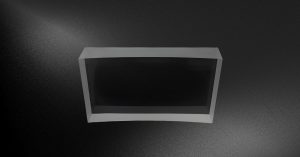
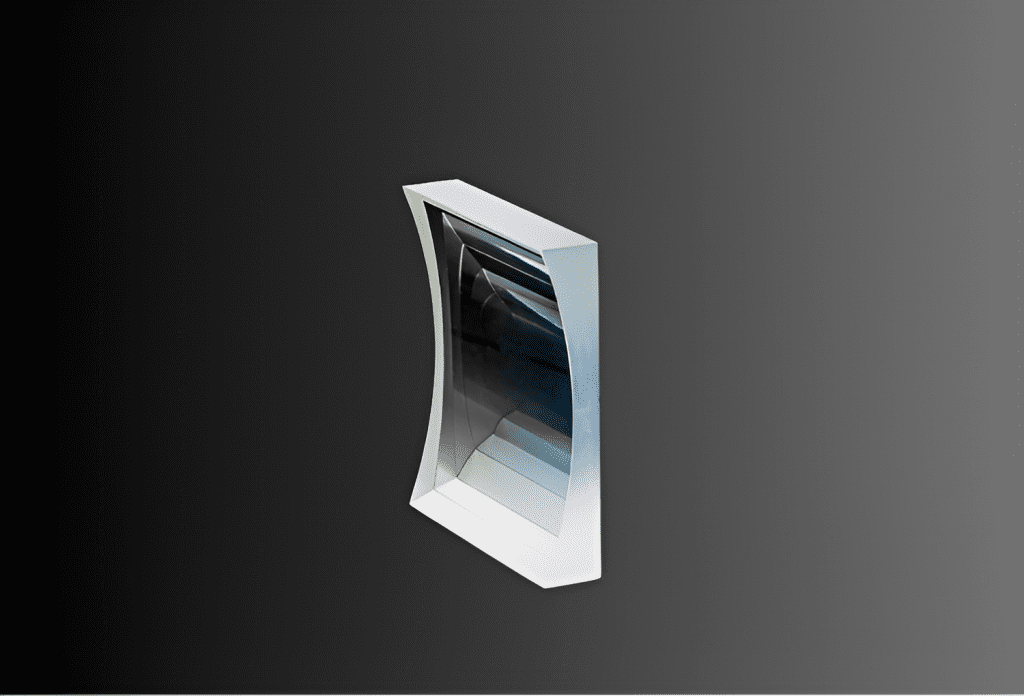
a Cylindrical lens
a Cylindrical lens
Cylindrical lenses
The “Clocking” Pitfall: Overcoming Rotational Misalignment in Design
The most common point of failure in cylindrical systems is not the lens power, but the rotational alignment (Clocking).
1. Rotational Sensitivity and Astigmatism
Unlike spherical lenses, a cylindrical lens is highly sensitive to angular orientation. A misalignment of even a fraction of a degree can introduce unwanted residual astigmatism, degrading the beam quality (M2) significantly.
Engineering Insight: For precision systems, mechanical mounting must include sub-degree adjustment capabilities or keyed alignment features to maintain wavefront integrity.
2. Aberration Control in One Dimension
Standard plano-convex cylindrical lenses are prone to spherical aberration when used at low f-numbers. In high-precision applications, engineers must consider:
Achromatic Cylindrical Doublets: Essential for multi-wavelength systems to prevent focal shift.
Acylindrical (Aspheric Cylindrical) Surfaces: Critical for high-NA laser collimation where diffraction-limited performance is required.
3. Metrology: The Missing Link in Design
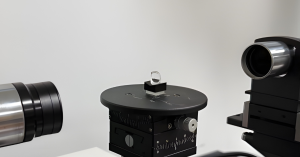
A precision design is only as good as your ability to verify it. Due to their lack of rotational symmetry, cylindrical lenses present unique metrology challenges that traditional spherical testing cannot address. To ensure our “as-built” optics meet your “as-designed” expectations, we employ a multi-tiered validation protocol.
Key Verification Protocols for High-Performance Systems
Sub-Arc-Second Axial Alignment: Beyond simple mechanical centering, we use Laser Phase-Shift Interferometry to decouple rotational errors from X/Y eccentricity. This mitigates “smile” distortion and beam steering in high-precision scanning systems.
Transmitted Wavefront Error (TWE) Analysis: By quantifying astigmatism and higher-order aberrations with transmission Fresnel interferometers, we ensure an EFL precision of 0.1%. This is critical for maintaining consistent beam waist and Strehl ratios.
Nanoscale Surface Validation: Utilizing 3D topography (white light interferometry), we verify Cylindricity and Straightness at the nanoscale. This level of scrutiny is essential for preventing energy hot-spots in high-power laser applications.
Manufacturing Excellence: Material Selection and Tolerance Stack-up
The lack of rotational symmetry makes the manufacturing and testing of cylindrical surfaces inherently more complex than spherical ones.
Substrate Selection: While N-BK7 is suitable for general visible-spectrum applications, Synthetic Fused Silica is the industry standard for UV and high-power laser systems due to its superior thermal stability and high damage threshold. In extreme environments, specialized materials like Silicon or Germanium are utilized for IR sensing.
Tolerance Stack-up: Beyond surface figure, engineers must specify the Cylindrical Axis Tolerance relative to the mechanical edges. A “wedge” in the non-powered axis can lead to beam steering errors that are difficult to compensate for downstream.
Conclusion: Bridging the Gap Between Design and As-Built Reality
Cylindrical lenses provide the necessary degrees of freedom to solve complex beam-shaping challenges, but their success depends on a holistic approach to design, alignment, and metrology. By addressing the practical engineering challenges of orientation and tolerance early in the design phase, you can ensure that the “as-built” performance matches your “as-designed” expectations.
Whether you are developing a next-generation LiDAR system or a high-resolution medical imaging instrument, the right optical partner can bridge the gap between standard components and optimized performance.
Ready to move from design to reality? Don’t let alignment or metrology errors compromise your system’s performance. Our engineering team is available to review your specifications and help you optimize your optical layout for real-world manufacturing tolerances.