
Waveplates are optical components that use birefringent materials to introduce a phase delay between orthogonal light components, enabling precise control of polarization states for applications in imaging, sensing, and communications.
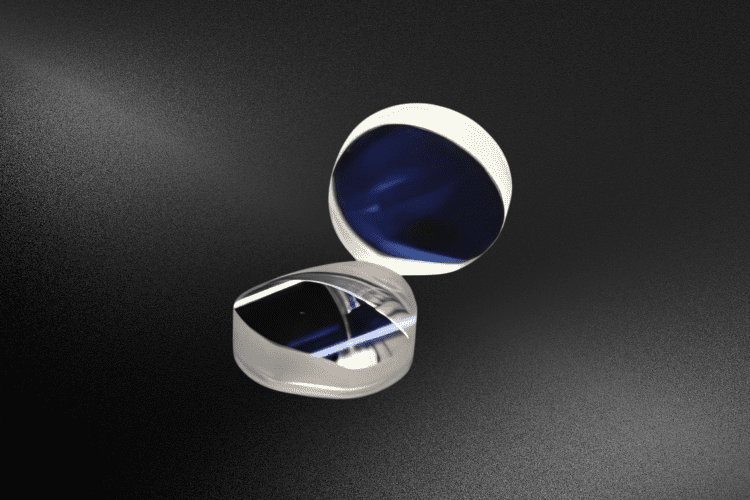

Waveplates are optical components that use birefringent materials to introduce a phase delay between orthogonal light components, enabling precise control of polarization states for applications in imaging, sensing, and communications.

Learn how to avoid overconfidence in idealized optical models by understanding real aberrations, distortions, and the diffraction limit.
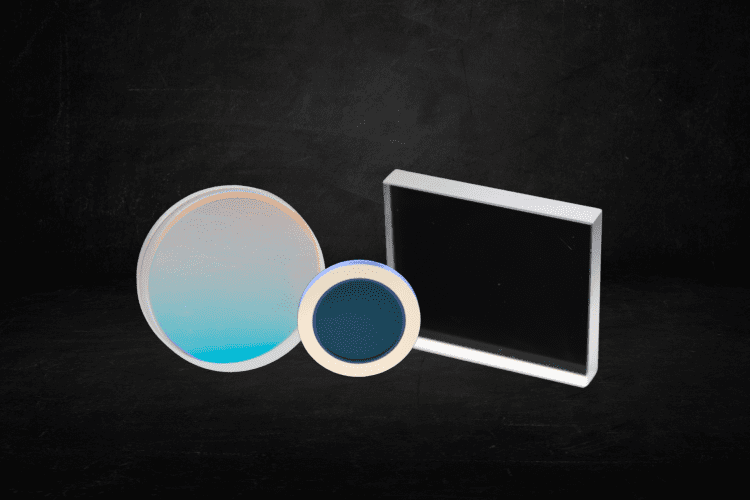
Sapphire windows applications range from smartphone lenses to satellite viewing windows to tiny endoscope optics.

Discover how Avantier’s advanced solutions counteract underwater imaging issues, enhancing the capacity to observe and study the underwater world, supporting operations in various marine industries.
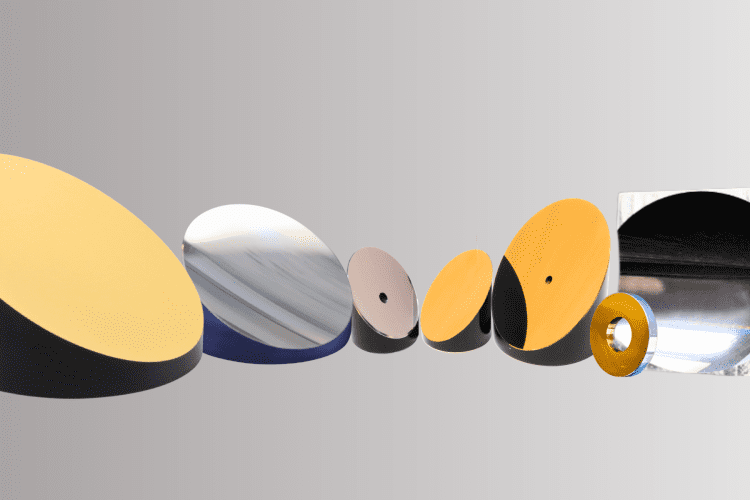
Reflective optics are the optics of mirrors: smooth reflective surfaces that change the direction of a wavefront. Reflective optics are key to many industrial and life science applications, as well as astronomy and high-energy physics; they provide a simpler, more affordable option when contrasted with refractive systems.

The diffraction limit is a fundamental constraint on optical systems, defining the maximum achievable resolution due to light diffraction. Ignoring it leads to unrealistic performance expectations in imaging systems.

Confused about geometric optics vs wave optics and how they work together? This article explains what they involve and when to use which.

A Powell lens is a cylindrical lens with an aspherical surface used to shape laser beams into straight, uniformly illuminated lines. It redistributes a Gaussian beam intensity, eliminating central “hot spots” and producing consistent, flat-top light.

Avantier’s custom Powell lens solutions allow clients to achieve desired laser beam quality and performance across various industrial and research applications.
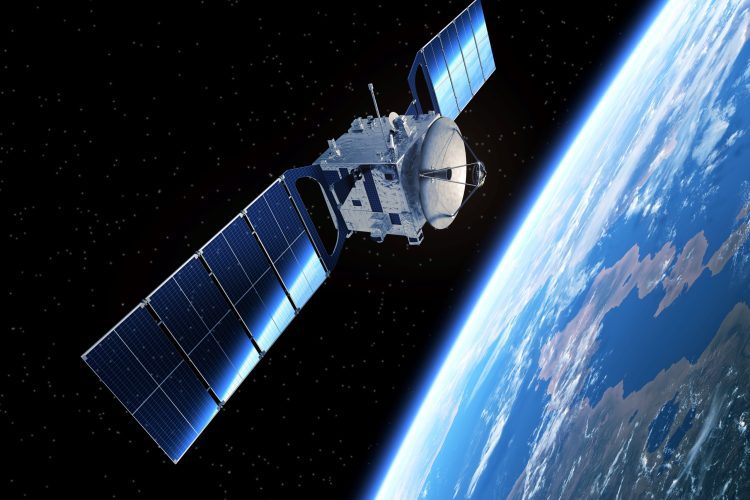
A space optical remote sensing payload is the core of a spacecraft, generating data via imaging sensors (e.g., multispectral, LiDAR) and transmitting it to Earth using advanced optics like lasers and adaptive systems.