
Discover how optical processing transforms materials into precision components for semiconductors and biomedical devices industries.

Discover how optical processing transforms materials into precision components for semiconductors and biomedical devices industries.

Chalcogenide materials transmit IR light with minimal dispersion and can provide high quality imaging. Due to germanium export restrictions, many in the optics industry are turning to these substrates to maintain product continuity and mitigate the effect of supply chain disruptions.

Optics for optical quantum computing are the key to ultra-fast computing system that work at— literally— the speed of light.

Ignoring optical polarization can seriously degrade optical system performance. It leads to issues like reduced contrast, chromatic aberrations, ghosting, and even failure in laser applications where polarization directly affects behavior.
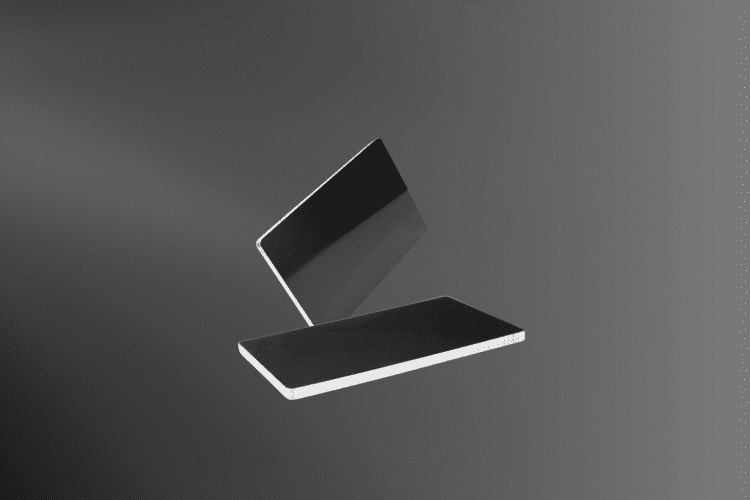
Enhance optical systems with durable Diamond-Like Carbon (DLC) coatings, offering high hardness, low friction, and superior IR transparency.
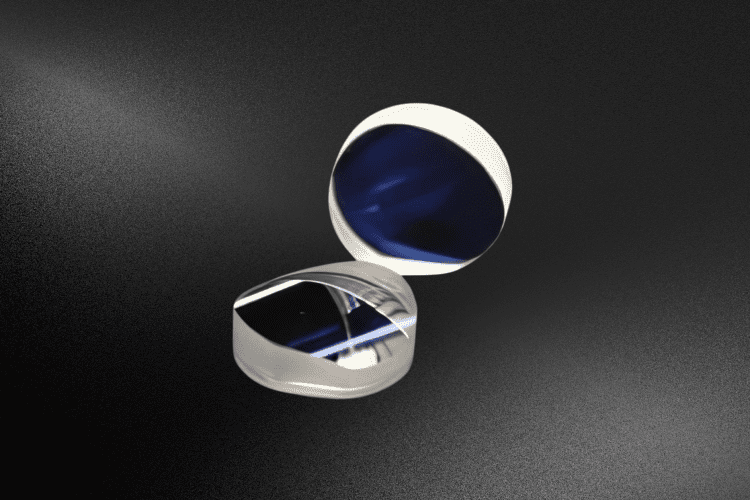
Waveplates are optical components that use birefringent materials to introduce a phase delay between orthogonal light components, enabling precise control of polarization states for applications in imaging, sensing, and communications.

Learn how to avoid overconfidence in idealized optical models by understanding real aberrations, distortions, and the diffraction limit.
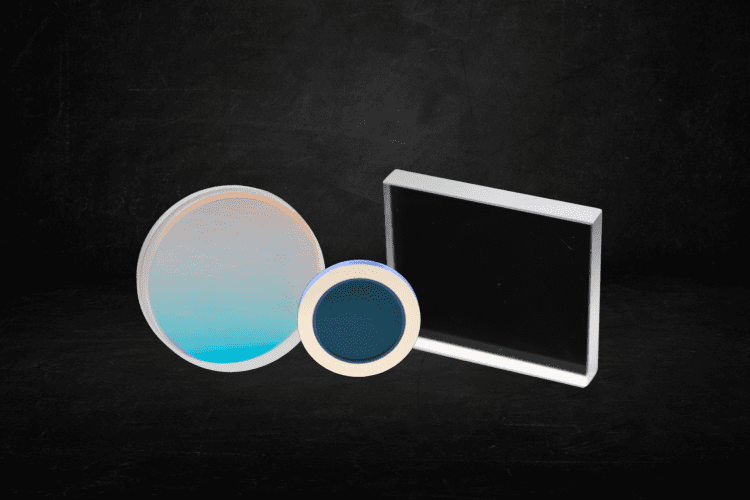
Sapphire windows applications range from smartphone lenses to satellite viewing windows to tiny endoscope optics.
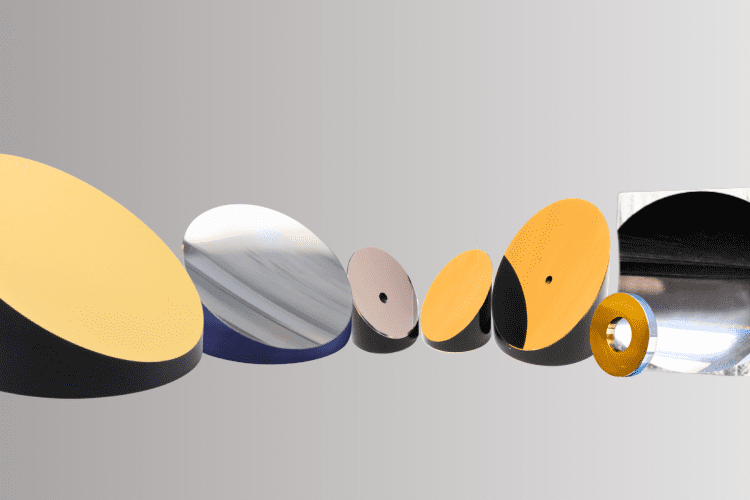
Reflective optics are the optics of mirrors: smooth reflective surfaces that change the direction of a wavefront. Reflective optics are key to many industrial and life science applications, as well as astronomy and high-energy physics; they provide a simpler, more affordable option when contrasted with refractive systems.

The diffraction limit is a fundamental constraint on optical systems, defining the maximum achievable resolution due to light diffraction. Ignoring it leads to unrealistic performance expectations in imaging systems.