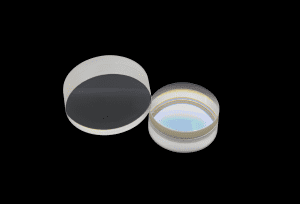
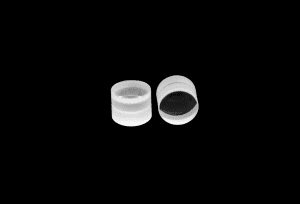
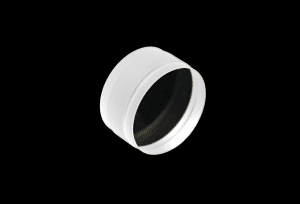
Achromatic lenses are precision optical components designed to correct chromatic aberration and significantly reduce spherical aberration in optical systems. Chromatic aberration occurs because different wavelengths of light refract at different angles as they pass through a lens, causing colors to focus at different points. Consequently, this results in blurred images, color fringing, and reduced optical performance.
Traditional single-element lenses are especially prone to chromatic aberration due to material dispersion. Therefore, this limitation can negatively impact image quality in demanding applications such as astronomy, laser optics, medical imaging, microscopy, and photography, where accuracy and clarity are critical.
However, achromatic lenses overcome these challenges by bringing multiple wavelengths—typically red and blue light—into a common focal point, producing sharper images with improved color fidelity.
Achromatic Lenses
Achromatic Lenses
Optical Lens Design and Performance of Achromatic Lenses
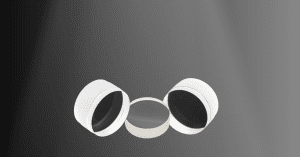
Achromatic lenses achieve chromatic correction by combining multiple optical elements with different dispersive properties. Typically, most commonly, an achromatic lens is designed as a doublet, consisting of:
Positive (convex) element made from low-dispersion glass such as crown glass
Negative (concave) element made from high-dispersion glass such as flint glass
This optical pairing effectively corrects chromatic aberration while minimizing spherical aberration and coma.
However, it is important to note that the number of lens elements does not determine the number of wavelengths corrected. For example, an achromatic lens designed for the visible spectrum corrects red and blue wavelengths whether it is configured as a doublet or a triplet.
Additionally, Avantier offers computer-optimized achromatic lenses designed to minimize spherical aberration and coma, delivering smaller focused spot sizes, especially at infinite conjugate ratios.
Achromatic Lenses
Achromatic Lenses
Applications of Achromatic Lenses
Achromatic lenses are widely used across industries that demand high optical precision and image quality:
Astronomy Imaging and Photography
Used in cameras, camcorders, telescopes, and imaging systems to deliver sharp images with reduced color fringing and distortion.
Laser Systems
Improve laser beam quality and enable precise beam focusing in industrial, scientific, and research laser applications.
Microscopy
Essential components in optical microscopes, enabling high-resolution imaging with accurate color representation for research and analysis.
Medical Instruments
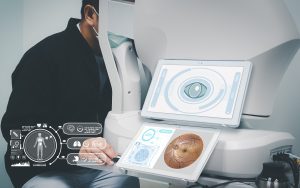
Integrated into medical devices such as endoscopes and ophthalmoscopes to ensure reliable visualization and diagnostic accuracy.
Materials for Achromatic Lenses
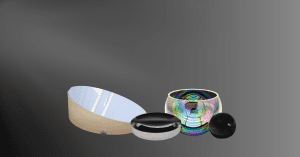
Avantier manufactures achromatic lenses using a wide range of optical materials to support applications from UV to infrared wavelengths, including:
Optical glass
UV fused silica (JGS1)
Infrared fused silica (JGS3)
Calcium fluoride (CaF₂)
Barium fluoride (BaF₂)
Other crystalline optical materials
Manufacturing Capabilities
Specifications
Factory Standards
Manufacturing Limit
Dimension Tolerance
+/-0.03mm
+/-0.01mm
Center Thickness Tolerance
+/-0.03 mm
+/-0.02mm
Radius Tolerance
+/-0.3%
+/-0.2%
Surface Quality(S/D)
20-10
10-5
Irregularity
1/5 Lambda
< 1/10 Lambda
Centration(arc min)
3′
1′
Use Case: Broadband Precision Imaging
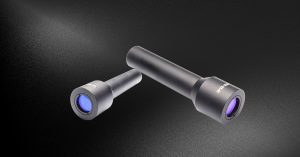
Avantier has developed a specialized achromatic imaging lens designed for precision beam collimation, tight light focusing, and efficient light collection across a wide spectral range from 200–1100 nm. The lens projects broadband light onto a sample as a small, symmetric focused spot and efficiently collects scattered light for high-accuracy, full-spectrum measurements. Furthermore, the achromatic design ensures consistent performance with minimal chromatic aberration across all wavelengths.
Key Specifications:
Spectral Range: 200–1100 nm
Clear Aperture: ≥ Ø9 mm
Focused Spot Size: ≤ 50 μm
Custom Achromatic Lens Solutions
Avantier specializes in custom achromatic lenses tailored to your specific optical design requirements. Our lenses can be manufactured for a wide range of wavelength regions, including visible, UV-visible, and NIR–IR, making them suitable for diverse scientific, industrial, and commercial applications.
📩 Contact Avantier today to schedule a consultation or request a quote for your next achromatic lens project.